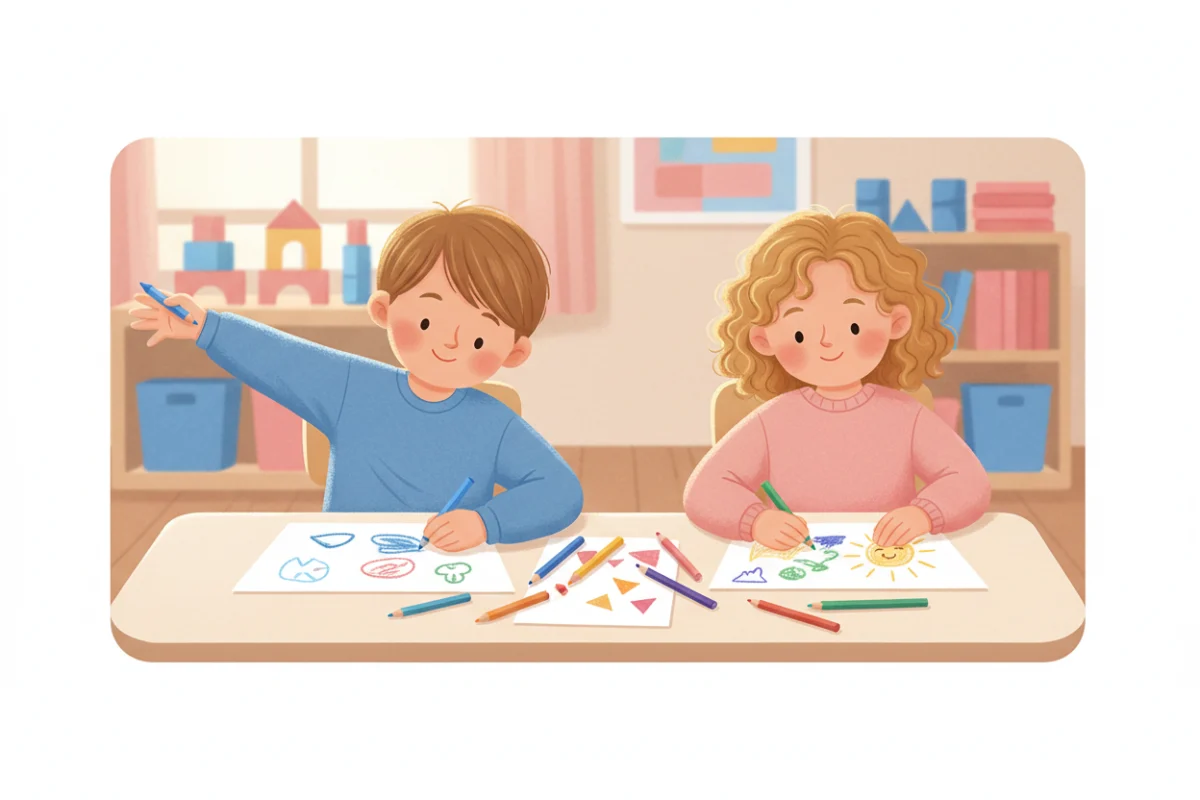
About one child in ten is left-handed. In a class of twenty-five, that is two or three children, every year. Yet most handwriting instruction, most classroom furniture, and most demonstrations are designed for right-handers, by right-handers.
Left-handed children do not have a problem. They have a different set of mechanics, and they need a few things taught slightly differently. When nobody shows them, they work out their own solutions, and that is where the hooked wrist, the smudged page, and the aching hand come from. A handful of small adjustments, made early, prevents most of it.
This guide is for both parents and teachers.
Left-handedness is normal
Let us start with the most important point. Never try to change a child’s writing hand. Hand preference is rooted in the way the brain is organized. Forcing a switch does not create a right-hander. It creates a confused and frustrated left-hander, and it can affect a child’s confidence for a long time.
Hand preference usually becomes clear between the ages of 3 and 6. Some switching in the early years is normal. To avoid influencing the choice, offer crayons, spoons, and toys at the middle of the child’s body and notice which hand reaches. If a child is still switching hands regularly for drawing at around age 6, mention it to the teacher or pediatrician, not because something is wrong but because a consistent writing hand helps skills develop.
Why writing is different for left-handers
When a right-hander writes in English, the hand pulls the pencil across the page and moves away from the words just written. The writing stays visible and the ink stays clean.
A left-hander pushes the pencil, and the hand follows the writing. That causes three typical difficulties.
- The hand covers the words, so the child cannot see what they have just written.
- The hand drags through the writing, smudging it.
- Pushing a pencil makes it dig in, so the movement feels less smooth.
Many left-handed children solve the visibility problem by curling the wrist over the top of the line, the well-known “hook.” It works, but it is tiring and slow, and it can become uncomfortable as the amount of writing grows. The aim of everything below is to give the child a clear view of their writing without the hook.
Paper position: the biggest fix
If you change only one thing, change this.
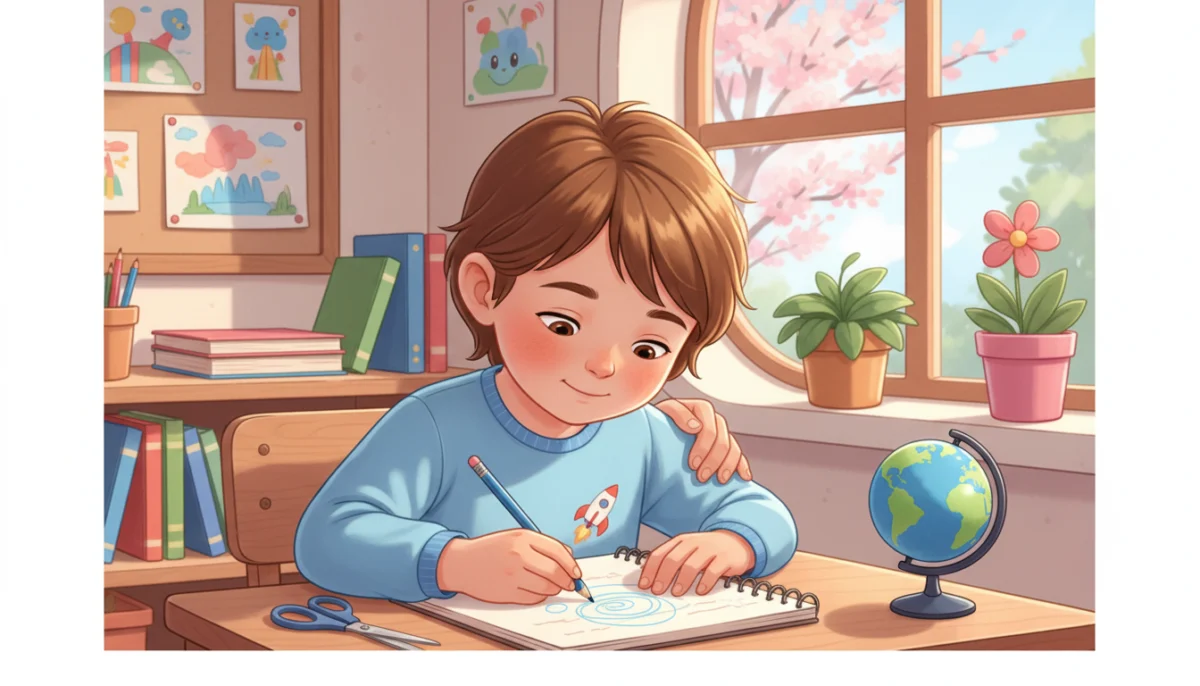
- Place the paper slightly to the left of the child’s body, not in the middle.
- Tilt the paper clockwise, so that the top right corner is higher than the top left, by around 30 to 45 degrees. Find the angle that feels comfortable.
- The right hand holds the paper steady.
- The writing hand and wrist stay below the line of writing, with the wrist straight.
In this position the child can see the words, the hand stays out of the ink, and the arm moves freely. A strip of tape on the desk or a placemat with the paper angle drawn on it is a good reminder in the early months. Right-handed adults often straighten the paper without thinking when they sit down to help, so try to notice that habit in yourself.
Pencil grip
The grip itself is the same as for right-handers, mirrored: the pencil is held between the thumb and index finger and rests on the middle finger. One detail is different. Left-handed writers should hold the pencil a little higher, about an inch to an inch and a half from the point. That small change lets them see over their fingers. A sticker or a band of tape on the pencil marks the spot.
Short crayons and pencils help fingers find a good position, just as they do for right-handers. You will find more ideas in our guide on how to help your child hold a pencil and, for teachers, in the overview of pencil grasp development stages.
Seating and classroom setup
- Seat a left-handed child at the left end of a shared table, or next to another left-hander, to avoid bumping elbows with a right-handed neighbor.
- Make sure the child can see the board without twisting.
- Check that light does not come from the left in a way that casts a shadow of the hand over the writing.
- When you demonstrate a letter one to one, sit opposite the child instead of beside them, so that they see a mirror image, or demonstrate with your left hand. Even a clumsy left-handed demonstration is useful.
- Give a left-handed child a little extra elbow room, at home as well as in class.
Letter formation for left-handers
Most letters are formed in the same way by both groups. There are a few places where flexibility helps.
- Horizontal strokes. Many left-handers naturally cross a t or draw the bars of E, F, and H from right to left, because pulling is easier than pushing. That is perfectly acceptable. The letter looks identical.
- Circles. Left-handers often prefer to draw circles clockwise. For letters such as a, d, g, and o, the usual counterclockwise movement makes joining easier later, so it is worth teaching gently. If a child’s letters are legible and fluent, however, this is not a battle worth fighting.
- Reversals. Left-handed beginners may mirror letters, or even whole words, a little more often, and may start writing from the right side of the page. A green dot or a sticker at the top left of the page showing where to start is a simple fix. Reversals generally fade by about age 7, as they do for other children.
- Models on the right. Worksheets usually place the model letter at the left of the line, exactly where a left hand covers it. Choose pages with the model at the top or on the right as well, or write one in yourself.
Teachers can find a step-by-step routine in our post on how to teach letter formation.
Tools that help
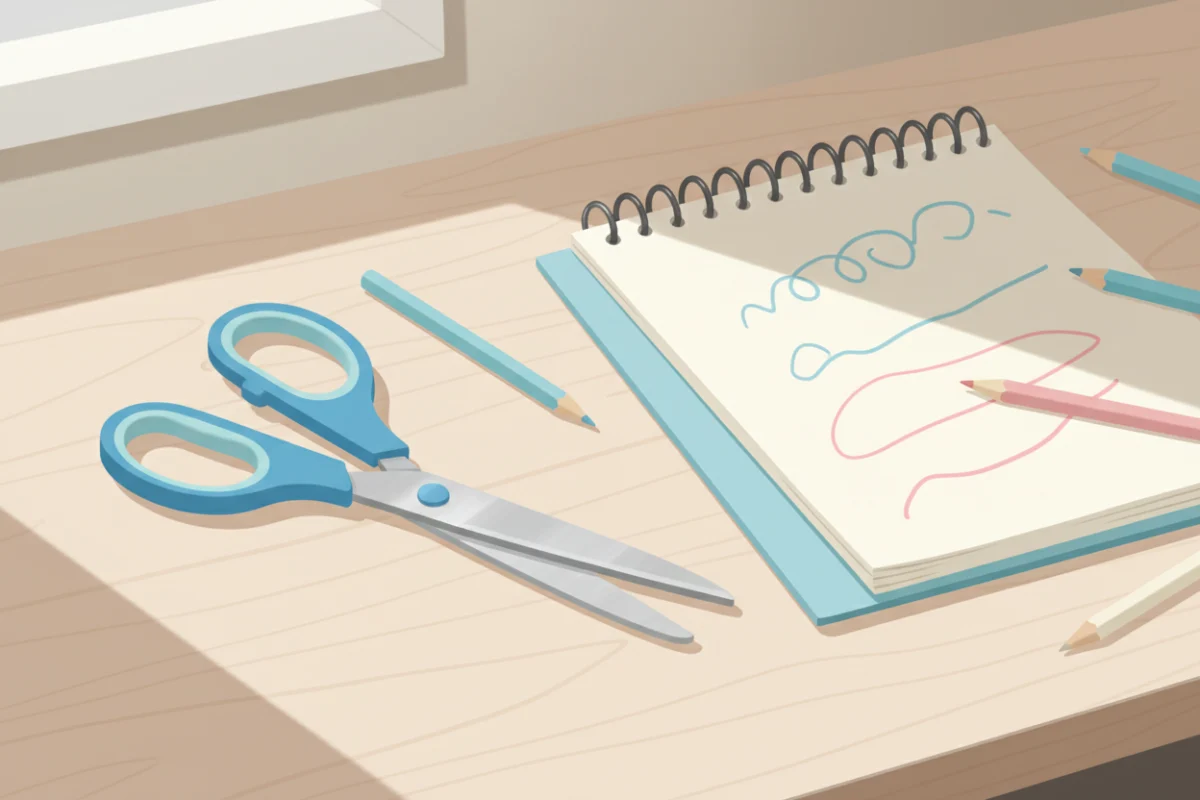
- Left-handed scissors. These matter. The blades are reversed so that the child can see the cutting line, and ordinary scissors often simply fold the paper when used with the left hand. Every classroom should have a few pairs, clearly marked.
- Pencils with slightly harder lead, which smudge less, and quick-drying pens for older children.
- Notebooks bound at the top, or loose sheets, so that the hand does not rest on a spiral binding. Opening a spiral notebook from the back is a trick many left-handers use.
- A slanted surface. A large ring binder turned sideways makes a simple writing slope that improves the wrist position.
- Pencil sharpeners and rulers. Ordinary ones are manageable, but left-handed versions exist and older children often like them.
You do not need to buy a full set of special equipment. Scissors and good paper position matter most.
If your child already hooks the wrist
Go gently. For a young child in pre-K to first grade, it is worth working on. Adjust the paper position, raise the fingers on the pencil, and spend time drawing on vertical surfaces such as an easel or paper taped to the wall, where hooking is almost impossible. For an older child with an established hook, fast and legible writing, and no pain, it is usually better to leave it. If there is pain, fatigue, or very slow writing, an occupational therapist can help.
What to say to a left-handed child
Children notice when they are the only one doing something differently. Present left-handedness as simply one of the ways people are made, like eye color. Point out left-handed people they know and admire, in the family, in sports, or in music. And when you show them the paper tilt or the higher grip, present these as clever tricks that left-handed writers use, not as corrections.
Frequently asked questions
When will I know if my child is left-handed?
Many children show a preference by age 3 or 4, and most have a settled writing hand by age 6. Watch which hand they use for drawing, eating, and brushing teeth.
Should I buy left-handed notebooks and pens?
Left-handed scissors are the one truly valuable purchase. Beyond that, correct paper position and a pencil that does not smudge make more difference than special products.
How should a left-hander position the paper?
Slightly to the left of the body and tilted clockwise, with the right hand holding it steady and the writing hand below the line.
Do left-handed children learn to write more slowly?
Not when they are taught with their needs in mind. Difficulties usually come from right-handed instruction, not from left-handedness. For more about what supports early writing, see our guide to graphomotor skills.