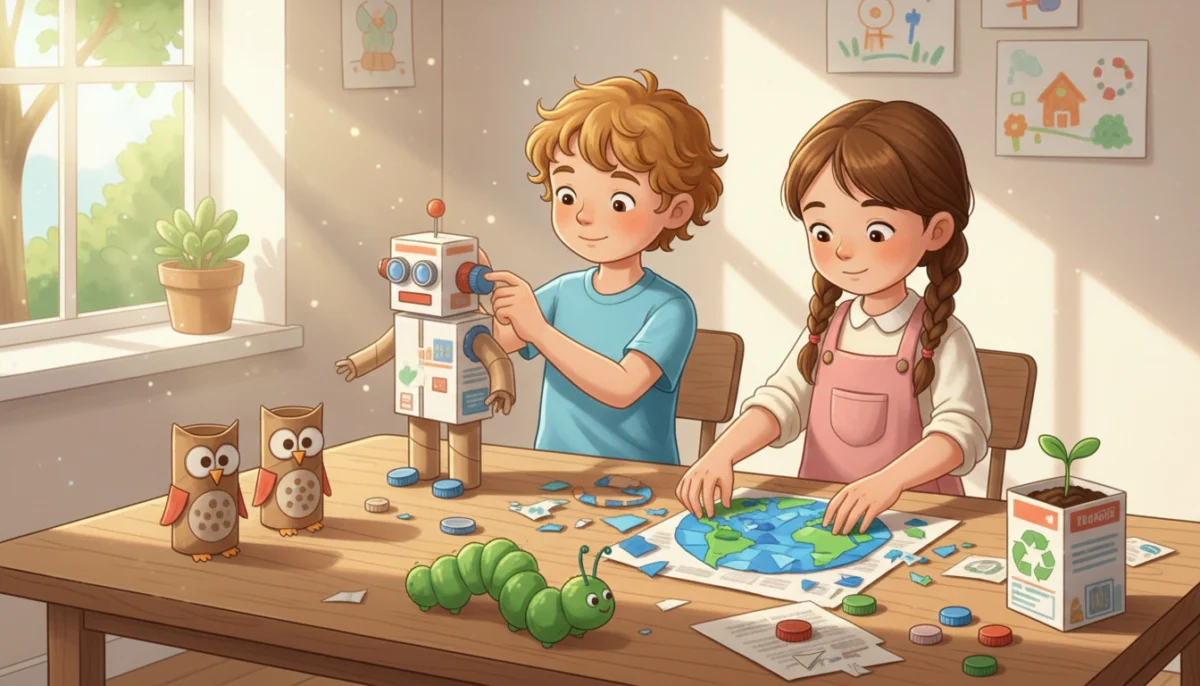
Earth Day, on April 22, is the easiest craft day of the year to prepare for, because the materials are already in your recycling bin. Cardboard tubes, cereal boxes, egg cartons, jars, bottle caps, junk mail and scraps of wrapping paper are all a child needs, and using them makes the point of the day better than any lecture: things do not have to be thrown away.
Here are fourteen crafts for ages three to eight, sorted by the material they start from, with the fine motor skill each one builds and a note on what to talk about while you make it.
Before you start
Spend a week collecting. Put a “craft recycling” box next to the regular bin and let your child decide what goes in. Rinse anything that held food. On the day, tip the box onto a covered table with scissors, glue, tape, paint and markers. The choosing and sorting is part of the fun, and part of the lesson.
Cardboard tubes
1. Tube animals
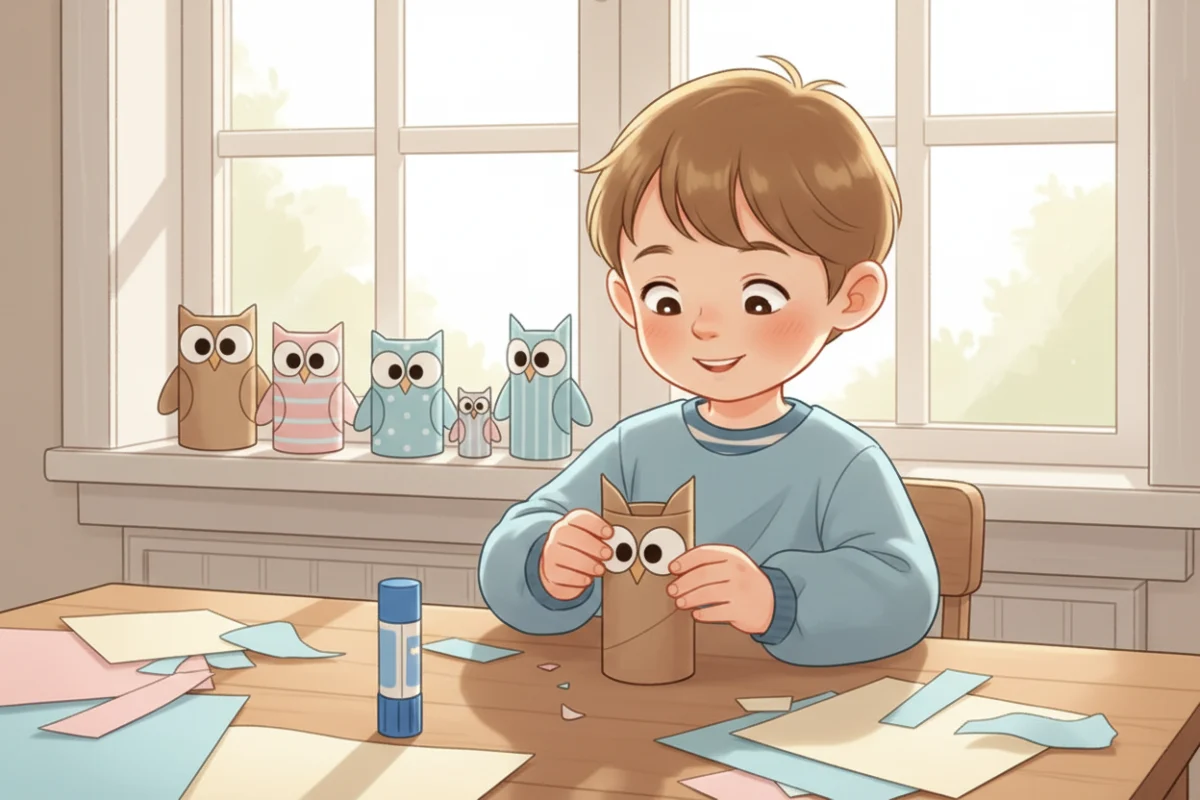
Ages 3 and up. Skill: wrapping, gluing, cutting. Tubes wrapped in paper with cut ears, wings and tails to make owls, foxes, rabbits and bees. Fold the top of the tube inward for owl ears.
2. Tube binoculars
Ages 3 and up. Skill: taping, decorating. Two tubes taped side by side, decorated, with a string to hang around the neck. Then go outside and look for birds.
3. Tube tree
Ages 5 and up. Skill: snipping, curling. A tube snipped from the top into strips that curl outward as branches, with torn green paper leaves glued on.
Boxes and cartons
4. Cereal box planter
Ages 4 and up. Skill: cutting card, decorating. A cereal box cut down to half height, covered in paper, lined with a plastic bag, and filled with soil and a bean seed. Watch it grow on the windowsill.
5. Egg carton caterpillar
Ages 3 and up. Skill: painting, pinching. A strip of egg carton cups painted green with paper antennae and a drawn face. The classic, and still good.
6. Egg carton flowers
Ages 4 and up. Skill: cutting curves. Cups cut into petal shapes, painted, glued to a stem. See our spring crafts for more flowers.
7. Recycled robot
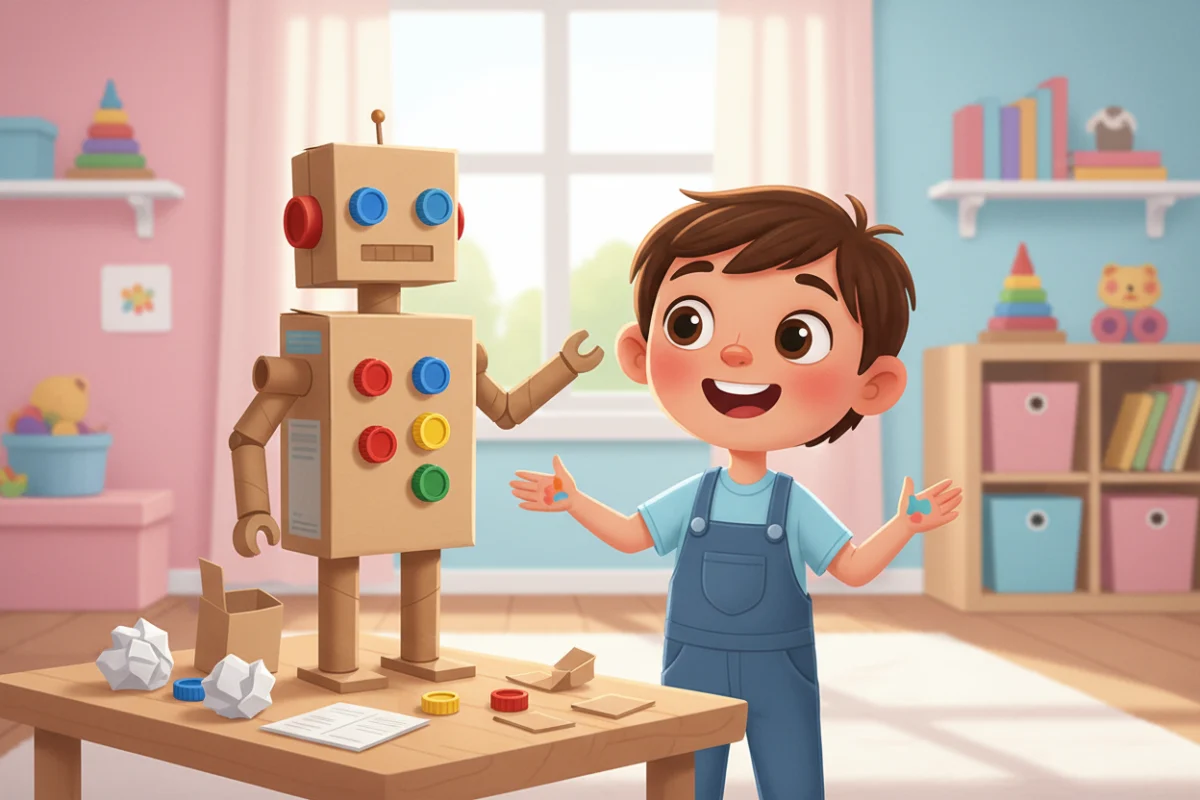
Ages 5 and up. Skill: planning, gluing, cutting. A box body, tube arms, bottle cap buttons, a small box head. The bigger the pile of junk, the better the robot.
Paper and junk mail
8. Junk mail Earth collage
Ages 3 and up. Skill: tearing, cutting, gluing. A large circle divided into land and sea, filled with torn blue and green pieces from magazines and flyers. Older children cut continent shapes.
9. Seed paper
Ages 4 and up. Skill: tearing, pressing. Torn paper soaked and blended into pulp, pressed flat with wildflower seeds mixed in, dried and cut into shapes. Plant the shapes and they grow.
10. Paper bead necklace
Ages 5 and up. Skill: rolling, threading. Long triangles cut from magazine pages, rolled tightly around a straw or skewer, glued at the tip, and threaded on string.
11. Newspaper hats and boats
Ages 4 and up. Skill: folding. The classic folded newspaper hat and boat. Test the boat in the bath.
Jars, caps and bottles
12. Bottle cap mosaic
Ages 3 and up. Skill: placing, sorting. Bottle caps sorted by color and glued onto a card shape (a fish, a flower, the letter E for Earth). Pinch and place.
13. Jar lanterns
Ages 4 and up. Skill: tearing, gluing. A clean jar covered in torn tissue paper glued with watered-down glue, with a battery tea light inside.
14. Bottle bird feeder
Ages 5 and up. Skill: cutting plastic (with help), assembling. A plastic bottle with two holes cut through and a wooden spoon pushed across as a perch, filled with birdseed and hung outside.
Crafts by age, at a glance
Three-year-olds: tube animals with your cutting, binoculars, the egg carton caterpillar, the junk mail Earth and the bottle cap mosaic. Four- and five-year-olds: the planter, egg carton flowers, seed paper, newspaper hats and jar lanterns. Six- to eight-year-olds: the tube tree, the robot, paper beads and the bird feeder. The robot in particular grows with the child: a three-year-old glues two boxes together, an eight-year-old builds a robot with moving arms and a control panel.
Skills hidden in the recycling
Recycled crafts use tougher materials than paper, which changes the fine motor demands. Cutting card and thin plastic builds hand strength; wrapping a tube tightly needs both hands working together; rolling paper beads is precise finger control; sorting caps is a pinch and place task; snipping a tube into strips is scissor practice with resistance. Our fine motor skills checklist by age shows where each of these fits, and our guide to scissor skills by age explains why card comes after paper in the cutting sequence.
Hand a child the tube tree or the bottle bird feeder and you are also handing them a strength workout that a worksheet could never provide.
What to talk about
Keep it simple and hopeful. “This box was going to be thrown away, and now it is a robot.” “Paper comes from trees, so using both sides saves trees.” “The bird feeder helps the birds in our yard.” Avoid frightening young children with pollution and disaster; the message of Earth Day for a five-year-old is that small actions matter and that they can do them.
A short walk with the tube binoculars, a litter pick with gloves, or planting the bean seed carries the day beyond the table.
An Earth Day afternoon plan
Start outside: a short walk with the tube binoculars made the day before, a small litter pick with gloves and a bag, and a look at what is growing. Come inside to the tipped-out recycling box and let each child choose one project from the list. Older children can plan the robot on paper first. While the glue dries, plant the bean seed in the box planter and put it on the windowsill. Finish with the jar lantern lit in a dim room and a talk about one thing the family will do differently this week: both sides of the paper, a reusable bag, the bird feeder filled every Sunday. The whole afternoon takes two hours and produces a windowsill of things that used to be trash.
Recycled crafts all year
None of these need to wait for April. A craft recycling box next to the bin, kept all year, is the cheapest craft supply there is, and children often prefer a cereal box to a clean sheet of card. Our guides to rainy day paper crafts and easy paper crafts for preschoolers use the same materials, and our guide to glue will help with the cardboard, which needs more than a glue stick.
Frequently asked questions
What can kids make from recycled materials for Earth Day?
Tube animals and binoculars, cereal box planters, egg carton caterpillars and flowers, a recycled robot, junk mail collages, bottle cap mosaics, jar lanterns and a bottle bird feeder.
What is an easy Earth Day craft for preschoolers?
The junk mail Earth collage: a big circle filled with torn blue and green pieces from magazines. No scissors needed and it makes the point of the day.
How do I explain Earth Day to a young child?
Say that Earth Day is a day to take care of our planet, and that small things help: reusing boxes, using both sides of paper, planting seeds and feeding birds. Keep it positive.
What glue works for cardboard crafts?
White glue or a low-temperature glue gun (adult-operated) for cardboard and tubes; a glue stick is enough for paper on paper. Tape is the fastest for young children.