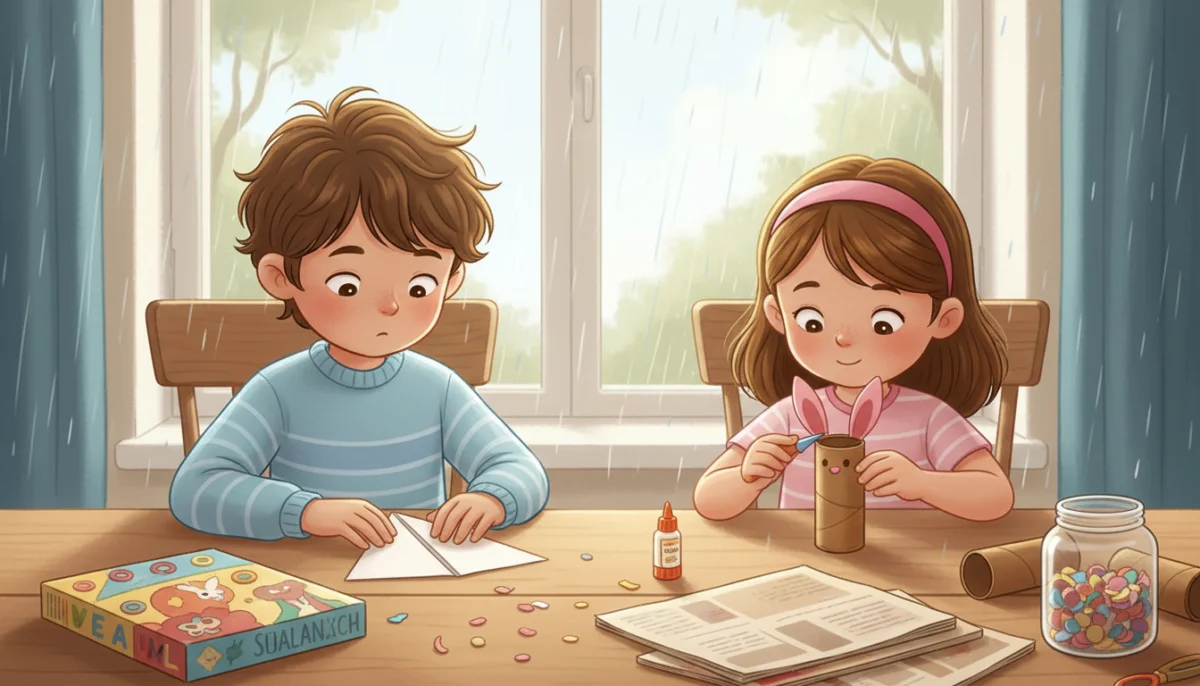
It is raining, the afternoon is long, and nobody wants to go to the store for craft supplies. Good news: a home is full of paper. Printer paper, junk mail, old magazines, cereal boxes, paper bags, wrapping paper scraps and cardboard tubes are all raw material, and children often prefer them to new craft paper.
Here are twelve crafts that need only what is already in the recycling bin, plus scissors, glue and something to draw with. They are sorted by how long they take, with the age range and the skill each one builds, so you can pick the right one for the child in front of you and the length of the rain.
Quick crafts (5 to 10 minutes)
1. Paper airplanes
Ages 4 and up. Skill: precise folding. Start with the classic dart. Fold in half, fold the corners to the middle, fold again, fold the wings down. Then test-fly and adjust. Older children can try three or four designs and hold a distance contest. Younger children fold with you, hand over hand.
2. Fringed fish from junk mail
Ages 3 and up. Skill: snipping, cutting curves. Cut a fish shape from a glossy flyer, snip a fringe for the tail and fins, draw an eye. A whole school of them can be taped to a window.
3. Snip confetti and a confetti jar
Ages 2 and up. Skill: snipping. Strips of colored paper cut into tiny pieces and collected in a jar. It is the simplest cutting practice there is, and the jar is useful later for collages.
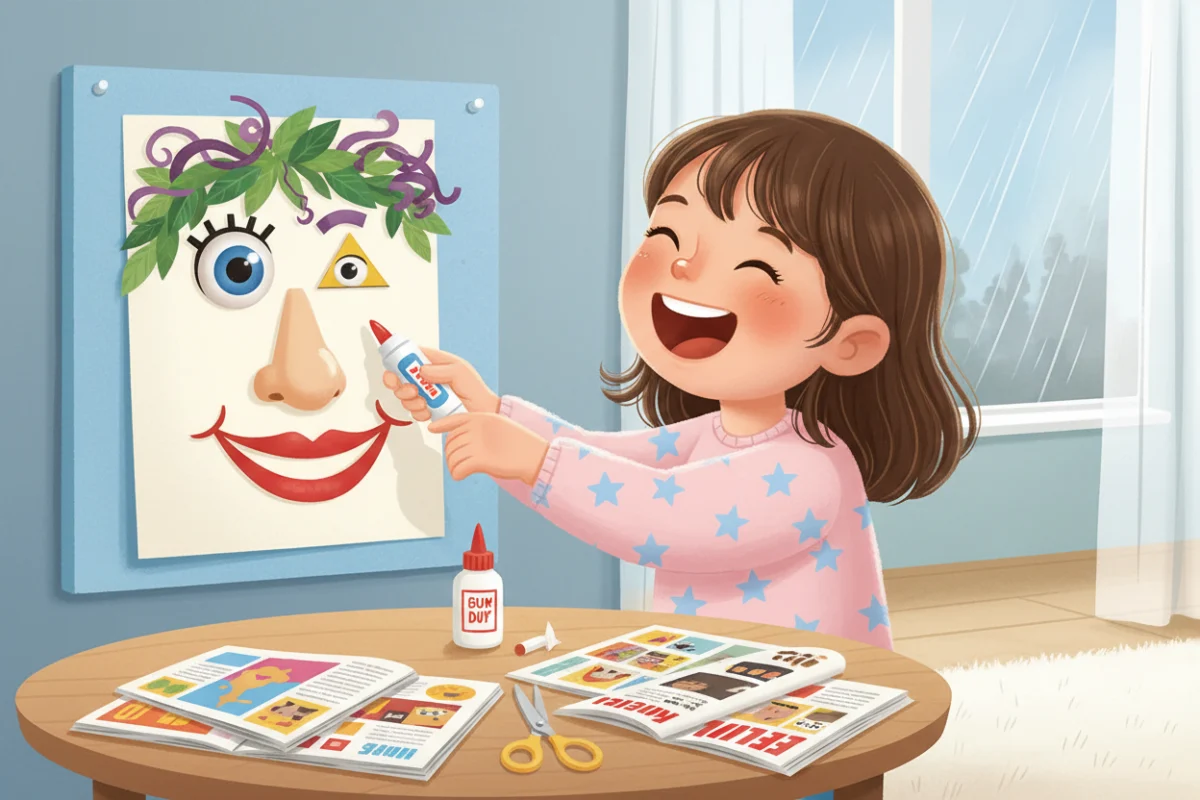
4. Magazine face collage
Ages 4 and up. Skill: cutting shapes, planning. Cut eyes, noses, mouths and hair from different magazine faces and glue them into a new, silly face. It is as funny as it sounds.
Medium crafts (15 to 20 minutes)
5. Fortune teller (cootie catcher)
Ages 6 and up. Skill: precise folding, following a sequence. Square a sheet, fold corners to the center twice, fold in half, and open the pockets. Write colors, numbers and fortunes inside. Younger children can decorate one you fold.
6. Cardboard tube animals
Ages 3 and up. Skill: gluing, cutting, placement. A toilet paper tube becomes an owl (fold the top in), a cat (cut ears), a rabbit (glue on long ears) or a monster (anything goes). Paper scraps for features, marker for faces.
7. Paper bag puppet theater
Ages 4 and up. Skill: cutting, gluing, storytelling. Lunch bags with paper features make puppets; a cereal box with a window cut out makes the theater. The show afterward can last longer than the craft.
8. Paper chain rain
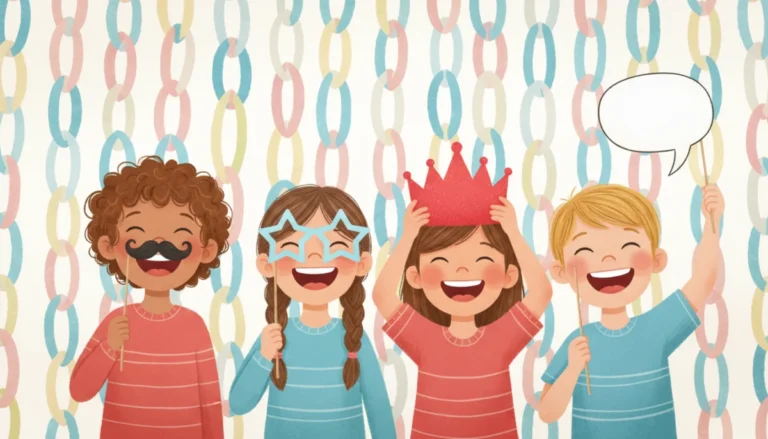
Ages 3 and up. Skill: cutting on a line, gluing. Blue and gray strips looped into chains and hung from a paper cloud in the window. Our guide to paper chains and garlands has more variations.
Longer projects (30 minutes or more)
9. Cereal box house or garage
Ages 5 and up. Skill: cutting card, planning, gluing. Cut doors and windows in a cereal box, cover with paper or paint, add a paper roof. Toy cars and figures move in afterward. Younger children do the decorating while you cut the card.
10. Paper weaving placemats
Ages 5 and up. Skill: bilateral coordination, over-under sequencing. Fold a sheet in half, cut slits from the fold, open, and weave strips of a different color through. Laminate with clear tape and use at dinner.
11. Accordion book
Ages 5 and up. Skill: folding, drawing, early writing. Fold a long strip of paper back and forth into pages, then draw a story one page at a time. Older children write a sentence on each page. Our guide to teaching your child to write their name explains why a book with their name on the cover is such a strong motivator.
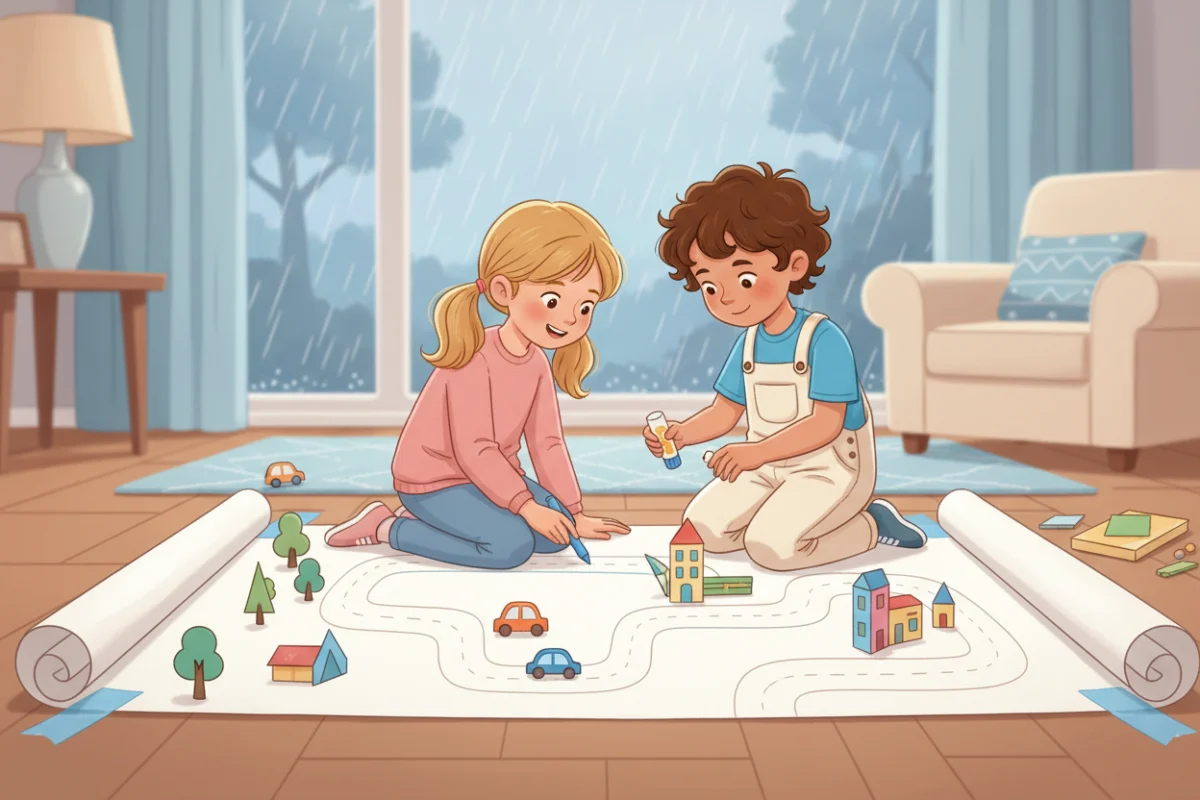
12. Paper city on the floor
Ages 3 to 8, together. Skill: everything. Tape a roll of paper or several sheets to the floor, draw roads, and let children cut and glue buildings, trees and cars from scraps. It can grow all afternoon and be added to on the next rainy day.
Setting up for success
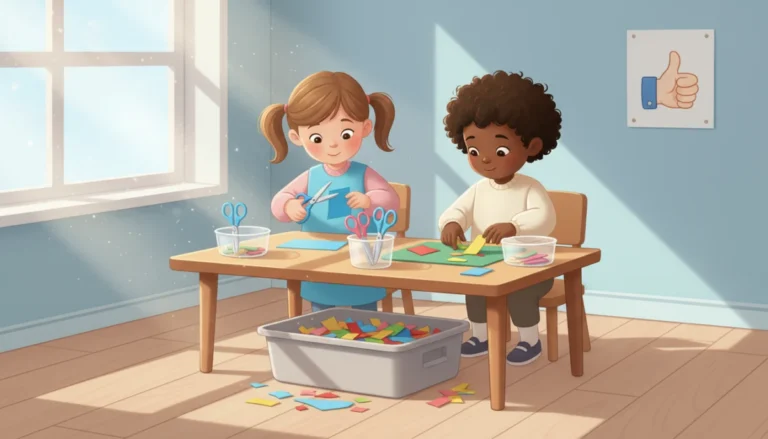
Cover the table, put the recycling bin next to it, and put all the paper in one tub. Give each child their own scissors and glue stick. Put the glue in a lid with a cotton swab for the youngest; see our guide to teaching kids to use glue. Then start one craft and let it drift. Rainy day crafts do not have to be finished, and half the fun is what children invent when they are left to it.
Building a rainy day box
The best preparation for a rainy afternoon is a box that is already packed. Keep a shoebox with a small stock of colored paper, a few cardboard tubes, a glue stick, child scissors, tape, markers and a handful of “special” items (stickers, googly eyes, a bit of yarn). Add to it whenever something interesting turns up in the recycling: a sturdy box, a glossy catalog, a paper bag with a good shape. When the rain starts, the box comes out and the afternoon is solved without a trip anywhere.
For families with more than one child, add a second pair of scissors and a second glue stick. Most craft squabbles are about tools, not ideas.
Keeping the crafts alive afterward
Paper crafts are quick to make and quick to end up in the bin, which is fine. But a few habits extend their life. Hang planes and fish in a window. Photograph the paper city before it is cleared. Keep the puppets in a bag for the next show. Let the accordion book live on the bookshelf with the real books. When children see their work kept and used, they put more care into the next one, and the fine motor practice gets better along with it.
When your child says “I can’t”
Almost every craft on this list has a version a child can do alone. If your child hands you the scissors, the shape is too hard: draw a bigger one with a thicker line. If they hand you the glue, the pieces are too small: cut bigger ones. If they walk away, the craft is too long: pick a quick one and stop while it is still fun. And if scissors are a struggle at any age, our list of fine motor activities at home builds the hand with play first.
Matching crafts to your child
A three-year-old wants tearing, snipping and gluing with big pieces. A five-year-old wants to cut their own shapes and make something that does something (a puppet, a plane, a house). A seven-year-old wants a challenge and a result they can show off. If the craft is too hard, they hand it to you; if it is too easy, they finish in a minute. Our guide to scissor skills by age helps you judge.
When the recycling bin is full, our Earth Day crafts from recycled materials has fourteen more projects built from boxes, tubes and junk mail.
Frequently asked questions
What paper crafts can kids make with no supplies?
Paper airplanes, fortune tellers, snip confetti, cardboard tube animals and magazine collages all need only paper from the recycling, scissors and glue or tape.
What are good rainy day crafts for a 3-year-old?
Snip confetti, fringed fish, cardboard tube animals and paper chain rain. Keep cutting to snipping and let them tear and glue freely.
How do I keep rainy day crafts from making a huge mess?
Cover the table, keep the bin next to it, give each child a tray, and put glue in a lid with a cotton swab. Tidy for two minutes between crafts rather than once at the end.
Do paper crafts help with school skills?
Yes. Cutting, folding, tearing and gluing build the hand strength, two-handed coordination and control that children need for handwriting and self-care tasks.