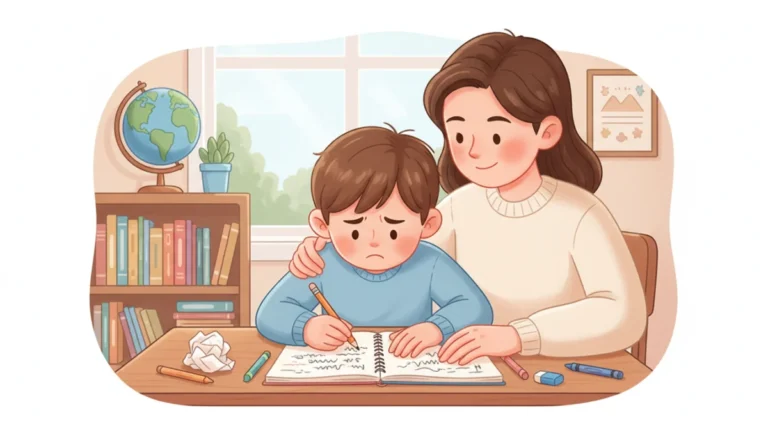
Walk around any kindergarten classroom during writing time and you will see a dozen different ways to hold a pencil. Some look textbook. Some look uncomfortable. A few make you wonder how any marks reach the paper at all.
Which of these need your attention, and which are simply a different route to the same place? This guide walks through the typical stages of pencil grasp development, explains what “functional” really means, lists the red flags worth noticing, and offers simple fixes you can use without turning writing time into a battle.
Why pencil grasp matters
A good grasp is not about looking neat. It is about efficiency. When the pencil is held by the fingertips and moved by small finger movements, a child can write for longer, with less effort, and with better control. When the pencil is moved by the wrist, elbow, or whole arm, writing is slower, more tiring, and less precise.
That matters more each year. In pre-K, a tiring grasp means a short drawing. By second grade, it can mean a child who knows plenty but writes as little as possible because it hurts.
The stages of pencil grasp development
Children move through these stages at their own pace, and many skip or blend them. Treat the ages as rough guides.
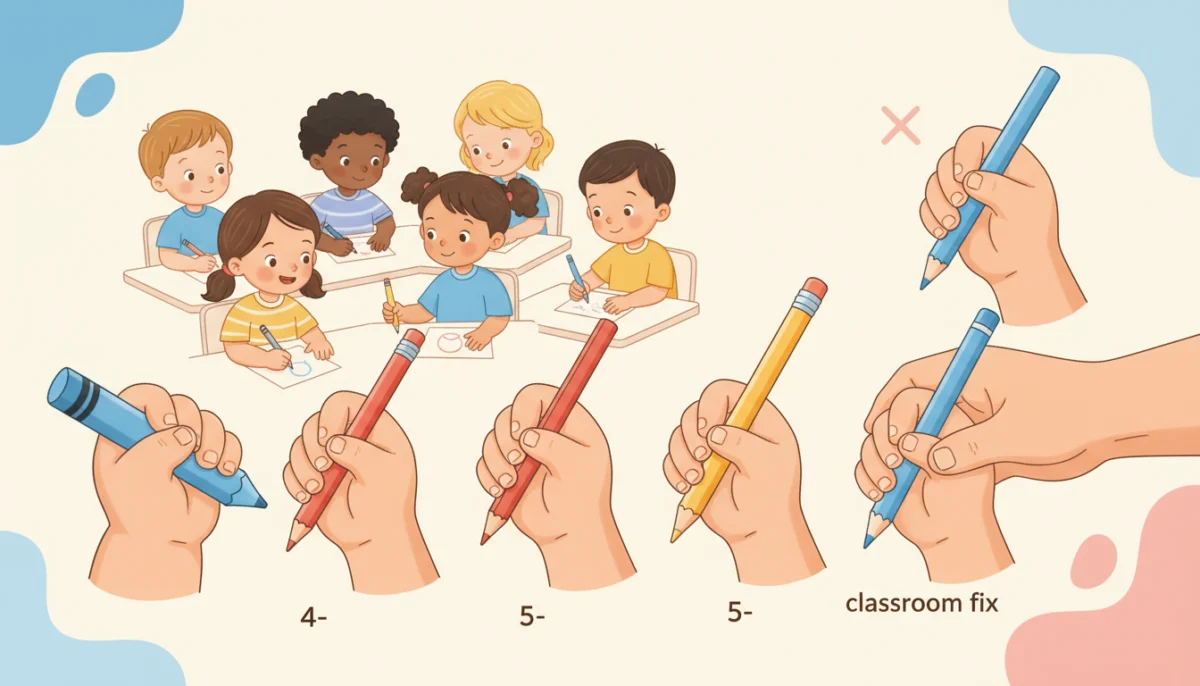
Palmar supinate grasp (about 12 to 18 months)
The crayon is held in a closed fist, with the thumb on top. Movement comes from the shoulder, so marks are large and sweeping. This is exactly what we expect from a toddler.
Digital pronate grasp (about 2 to 3 years)
The fingers now point down toward the paper and the palm faces the table. The arm still does most of the work, but the child has more control and begins to draw lines and rough circles.
Four-finger and static tripod grasps (about 3 to 4 years)
The pencil moves to the fingertips, held by three or four fingers. The grasp looks more grown-up, but it is “static”: the fingers hold still while the wrist and forearm move the pencil. Coloring is more contained and first shapes appear.
Dynamic tripod grasp (about 4 and a half to 6 years)
The pencil rests on the middle finger and is pinched between the thumb and index finger. The ring and little fingers curl into the palm to steady the hand. Most important, the movement now comes from the fingers themselves. This allows small, precise strokes, which is what letter formation needs.
Which grasps are functional?
For a long time, the dynamic tripod was treated as the only correct grasp. The current view among many occupational therapists is more relaxed. Several mature grasps are considered functional, including the following.
- Dynamic tripod: thumb and index finger pinch, pencil rests on the middle finger.
- Dynamic quadrupod: the same, with three fingers on the pencil and the pencil resting on the ring finger.
- Lateral tripod and lateral quadrupod: the thumb crosses over and presses against the side of the index finger instead of meeting it tip to tip.
What they share is more important than how they differ. A functional grasp has these features.
- The pencil is held near the tip by the ends of the fingers.
- There is an open, rounded space between thumb and index finger, or at least no pain and no strain.
- The wrist rests on the table, slightly bent back.
- The small finger movements, not the arm, do the work.
- The child can write legibly, at a reasonable speed, without discomfort.
If a grasp meets those conditions, it usually does not need to be changed, even if it is not the one on the classroom poster.
Red flags worth noticing
- A fisted grasp that persists past age 4
- All fingers wrapped around the pencil, or the thumb tucked under the fingers
- The pencil held straight up and down, or gripped very high or right at the lead
- Knuckles that turn white, or an index finger that bends sharply backward at the first joint
- Very heavy pressure that dents or tears the paper, or very light, shaky lines
- A wrist that hooks or floats in the air instead of resting on the table
- The whole arm moving for small strokes, well into kindergarten
- Frequent shaking out of the hand, or complaints that writing hurts
- Regular hand switching after about age 5
One sign alone may mean little. Several together, especially with slow or avoided writing, deserve a closer look.
Simple classroom fixes
Make tools small
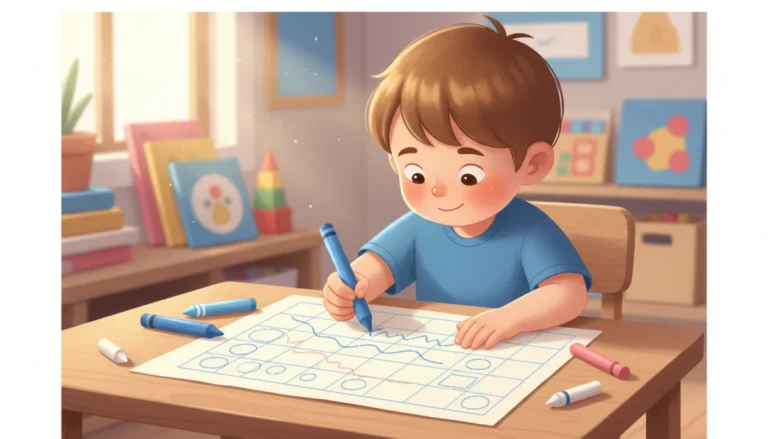
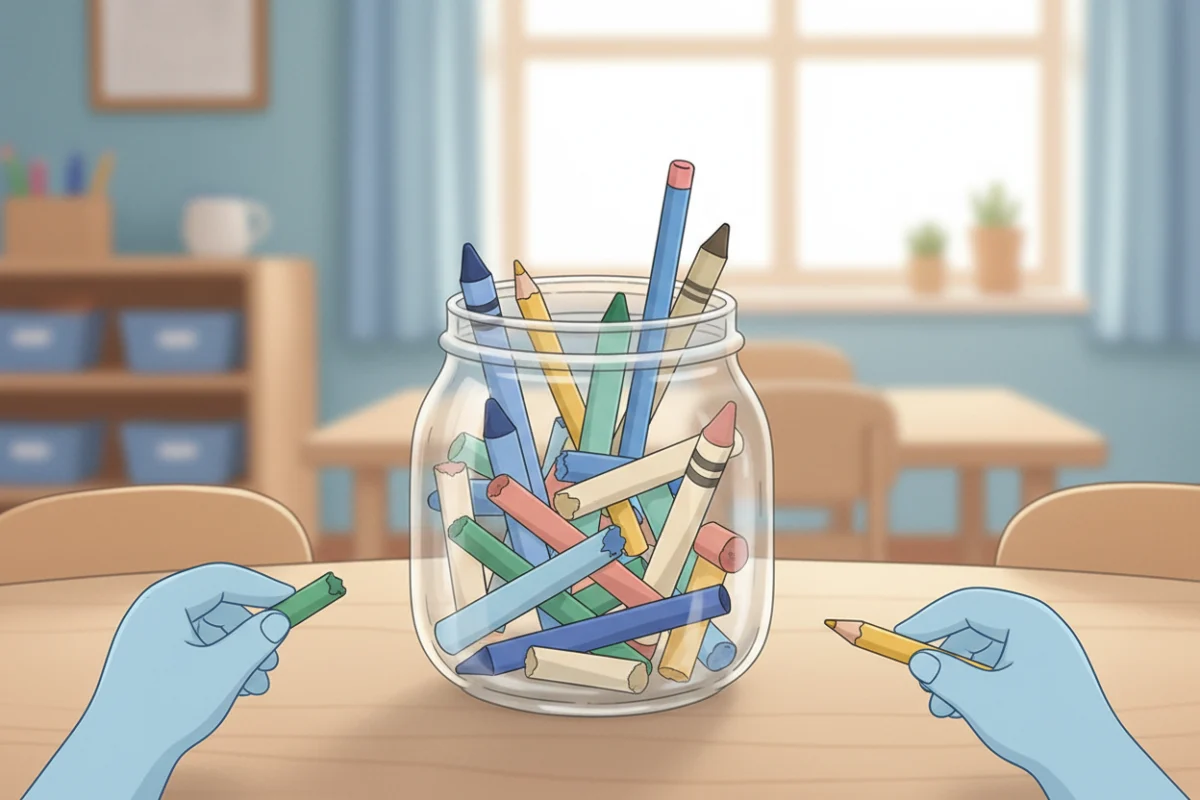
This is the single most effective change. A broken crayon, a golf pencil, or a small piece of chalk cannot be held in a fist. There is only room for fingertips. Keep a jar of short crayons for drawing time and watch grasps improve on their own.
Work on vertical surfaces
Easels, whiteboards, and paper taped to the wall bend the wrist back into a writing position and strengthen the shoulder and arm. Ten minutes a day at a vertical surface helps many children who hook their wrist or slump over the table.
Teach the pinch and flip
Lay the pencil on the table with the point facing the child. The child pinches the pencil near the tip with thumb and index finger, picks it up, and uses the other hand to flip it back so that it rests in the web of the hand. It takes a minute to teach and becomes a routine.
Hide something in the hand
Ask the child to hold a small pom-pom, a bead, or a folded tissue under the ring and little fingers while writing. It keeps those fingers tucked away and leaves the other three free to do their job.
Mark the spot
A small sticker or a band of tape about an inch from the tip shows where fingers belong. For children who grip the very end of the pencil, this small cue is often enough.
Build the hand, not just the hold
A weak hand will return to a tight or immature grasp, however many times you correct it. Tongs, clothespins, spray bottles, playdough, and hole punchers build the muscles that make a mature grasp comfortable. Our post on fine motor centers for handwriting has a list you can set up this week.
Check the furniture
Feet flat on the floor, hips and knees at roughly right angles, and a table at about elbow height. A child whose feet dangle has to work hard just to stay upright, and the hand pays the price. A box or a stack of books under the feet is a quick fix.
What about pencil grips?
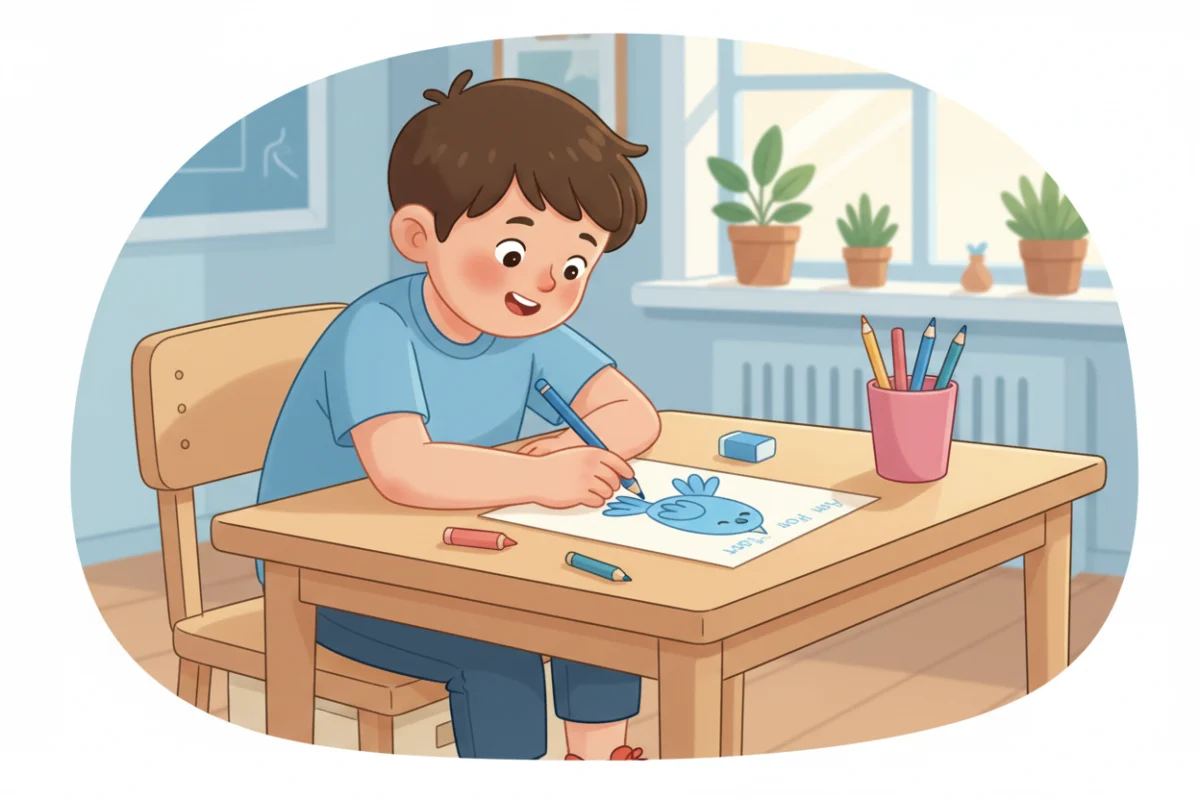
Rubber pencil grips can help some children, particularly as a temporary reminder of where fingers go. They are not a cure. A grip placed on the pencil of a child with weak hands usually ends up held in the same inefficient way. Try short tools, vertical surfaces, and hand strengthening first. If you do use a grip, choose it with advice from an occupational therapist if you can, and review after a few weeks whether it is helping.
When to leave a grasp alone
This is the part many of us find difficult. By second grade or so, a grasp is a well-practiced habit and hard to change. If an older child’s grasp looks unusual but their writing is legible, reasonably quick, and pain-free, the kindest and most effective choice is often to leave it alone. Put your energy into letter formation, spacing, and fluency instead.
The best window for shaping grasp is between ages 3 and 6, when habits are still forming. That is why what happens in pre-K and kindergarten matters so much.
Working with families
Parents often worry about pencil grasp, and they are well placed to help. Share two or three specific ideas instead of a general “please practice.” Short crayons at the kitchen table and drawing on an easel are easy wins. You can point families to our parent guide on how to help your child hold a pencil.
If a child shows several red flags and is not making progress after consistent support, talk with the family and follow your school’s process for an occupational therapy referral. This article offers general guidance for educators and does not replace an individual assessment.
Grasp and pressure go together. If a child presses so hard the tip snaps, or so lightly you cannot read the work, see our guide to pencil pressure problems.
Frequently asked questions
What is the correct pencil grasp?
There is more than one. The dynamic tripod is the best known, but the dynamic quadrupod and the lateral tripod and quadrupod are also widely considered functional. What matters is fingertip control, comfort, and legible writing.
At what age should a child hold a pencil correctly?
Most children develop a mature grasp between the ages of 4 and 6. A three-year-old holding a crayon in a fist is developing normally.
Should I correct a preschooler’s grasp?
Correct gently and indirectly. Offer short tools, vertical surfaces, and plenty of fine motor play. Constant verbal correction tends to create tension and avoidance.
Do fat pencils help young children?
Not always. Thick pencils can be heavy for small hands. Many children do better with short, regular-width pencils and crayons. Try both and see what gives the child more control. For the bigger picture, read our overview of graphomotor skills.