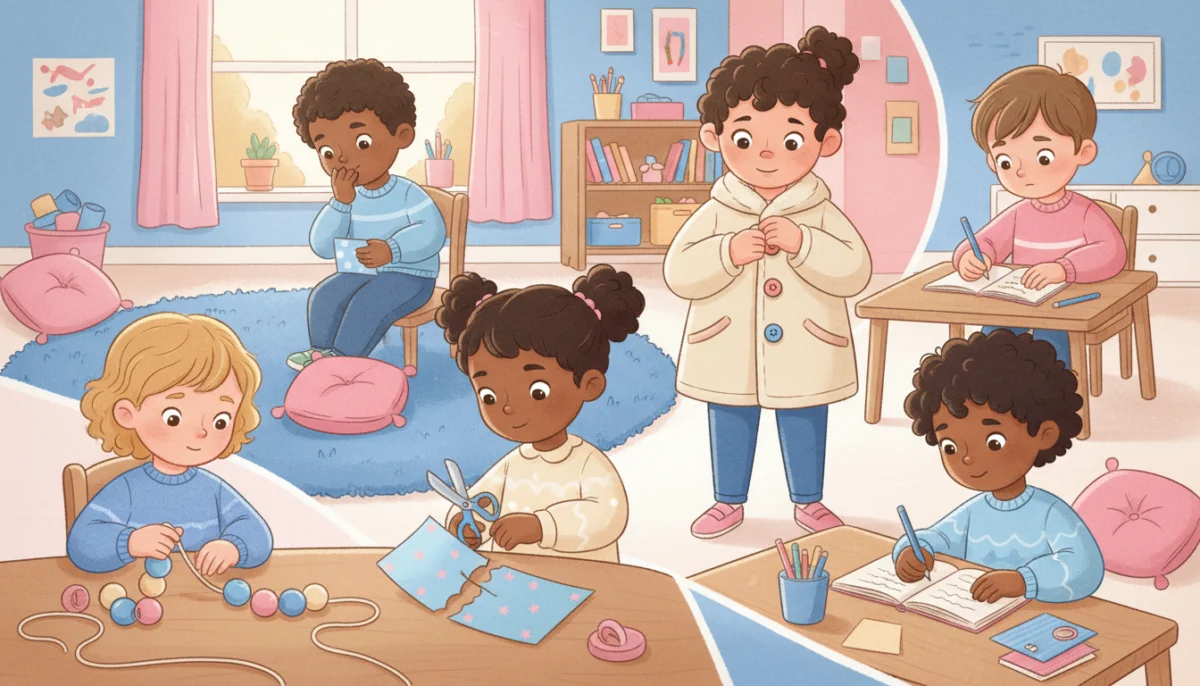
Fine motor skills are the small, precise movements of the hands and fingers: buttoning a coat, holding a spoon, cutting with scissors, writing a name. They develop in a predictable order, but the range of “normal” at any age is wide, and most parents have no reference point beyond the child next door.
This checklist gives you that reference. For each age from three to eight, it lists what most children can do in self-care, play, drawing and cutting, and writing, with notes on what matters for school. Use it as a guide, not a test. A child who misses one or two items is almost always fine. A child who misses many across several areas deserves a closer look, and the last section explains what to do.
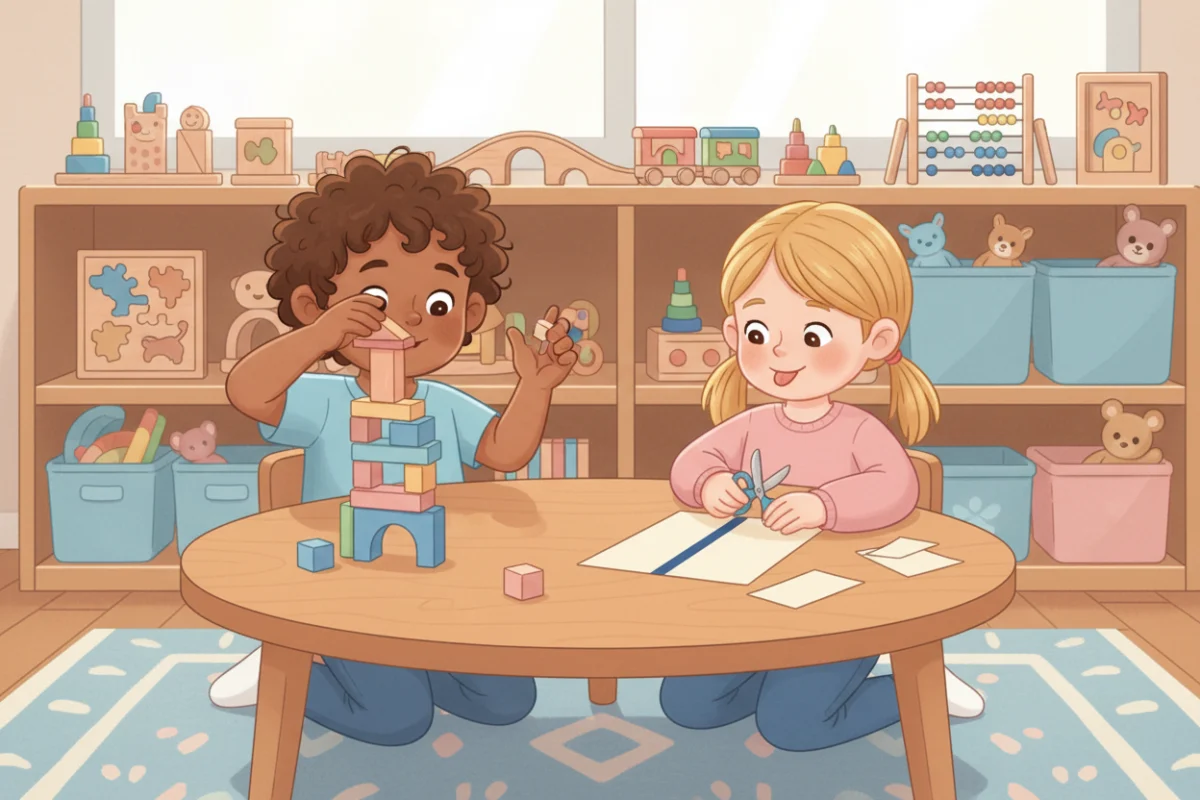
How to use this checklist
Ages are approximate, and the skills listed are those most children have by the end of that year. Children with lots of hands-on play tend to be ahead; children who spend more time on screens or in car seats tend to be behind, regardless of ability. If your child cannot do something, offer chances to practice and check again in a few months. The point is to notice patterns, not to tick boxes.
Age 3
Self-care: takes off shoes and socks, pulls pants up and down, uses a spoon well and a fork clumsily, drinks from an open cup, washes hands with help.
Play: builds a tower of eight to ten blocks, strings large beads, turns pages one at a time, opens and closes large containers, does simple two- to four-piece puzzles.
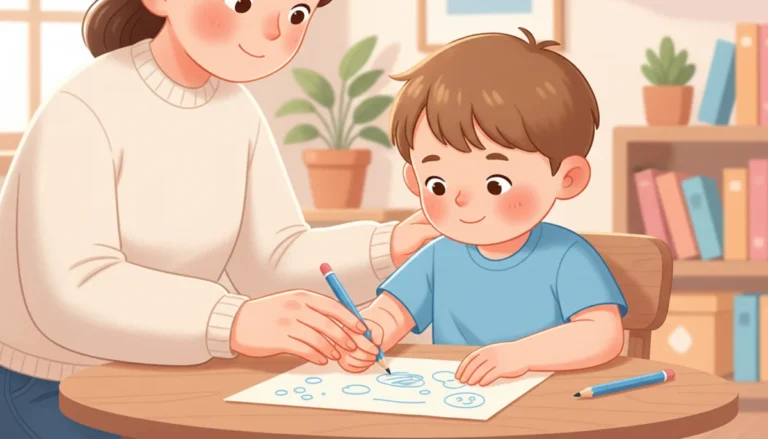
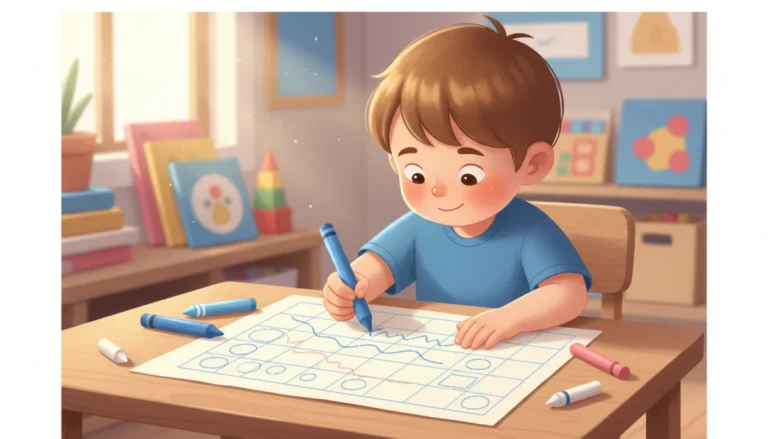
Drawing and cutting: holds a crayon with the fingers rather than a fist (though often with all fingers), imitates a vertical line, a horizontal line and a circle, scribbles with intent, snips paper with scissors.
Writing: none expected. Recognizing their own name in print is a bonus.
Age 4
Self-care: dresses with a little help, manages large buttons, uses a fork well, brushes teeth with supervision, pours from a small jug.
Play: builds detailed block structures, strings small beads, does puzzles of six to twelve pieces, uses play dough tools, can pick up small objects with a pinch.
Drawing and cutting: copies a cross and a square, draws a person with a head and a few body parts, colors a large shape mostly inside the lines, cuts along a straight line and around a large circle, holds the paper with the other hand.
Writing: may write some letters of their name, usually capitals. A hand preference is emerging. See our guide to handwriting readiness signs for what to look for at this age.
Age 5
Self-care: dresses independently including zippers and most buttons, uses a knife to spread, ties a simple knot, washes and dries hands alone, opens lunchbox containers.
Play: builds from a picture model, uses a small screwdriver or tweezers in play, does puzzles of twenty or more pieces, threads a lace through holes.
Drawing and cutting: copies a triangle and a diagonal line, draws a recognizable person with a body and details, colors within the lines of medium shapes, cuts out simple shapes with corners. Our guide to scissor skills by age has the full cutting sequence.
Writing: writes their first name with a capital and lowercase letters, copies most capital letters and some lowercase, holds a pencil with a tripod or near-tripod grasp, shows a clear dominant hand. Letter reversals are common and normal.
Age 6
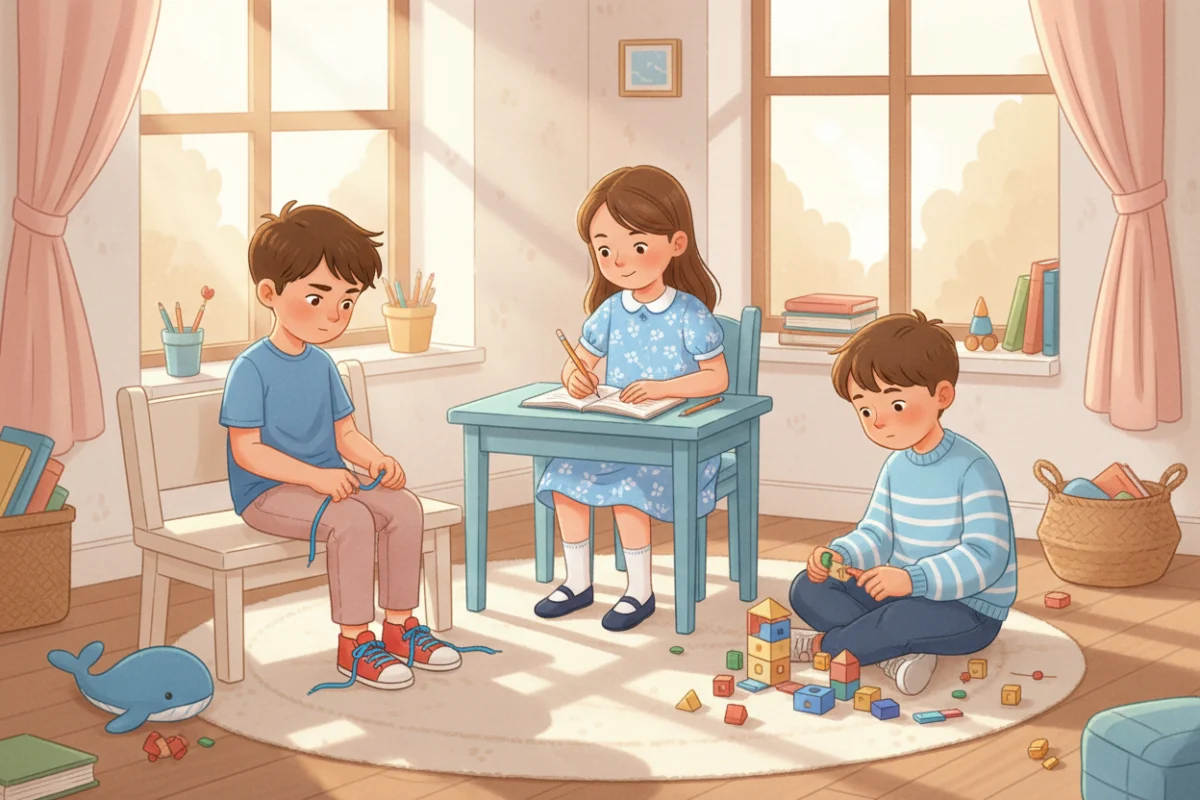
Self-care: ties shoelaces (often still learning), manages all fastenings, cuts soft food with a knife, opens packets and bottles.
Play: builds complex models with small pieces, does craft projects involving several steps, uses tools like a stapler or hole punch.
Drawing and cutting: draws detailed pictures with a scene, colors precisely within small areas, cuts out complex shapes with inside corners, follows thin lines.
Writing: writes all letters, upper and lowercase, with mostly correct formation; writes simple sentences; keeps letters roughly on the line; writes numbers to at least 20. Grasp is mature or close to it. Reversals are decreasing.
Age 7
Self-care: fully independent in dressing and eating, ties laces reliably, manages personal belongings.
Play: enjoys detailed construction, sewing cards, origami, beading with small beads, board games with small pieces.
Drawing and cutting: draws with proportion and detail, shades, uses a ruler, cuts accurately along thin lines.
Writing: writes legibly with consistent size and spacing, uses lowercase as the default, writes a paragraph without fatigue, forms letters quickly enough to keep up with ideas. Reversals should be rare by the end of the year. If handwriting is still a struggle, our guide to messy handwriting in first and second grade will help.
Age 8
Self-care: no fine motor limits on everyday tasks; can manage a lunch, a backpack and simple food preparation.
Play: builds intricate models, does craft and hobby work with fine tools, may begin an instrument.
Drawing and cutting: precise and controlled; draws from observation with detail.
Writing: writes fluently for extended periods, with automatic letter formation, good speed and legibility; may begin cursive; can copy from the board without losing place. Handwriting is now a tool rather than a task.
The skills behind the skills
If you look across the ages, a few threads run through the whole list. Hand strength lets a child pinch, squeeze and hold a tool for long enough to finish. Separation of the two sides of the hand, where the thumb and first two fingers do the skilled work while the other two tuck away, is what turns a fist grasp into a tripod grasp. Bilateral coordination lets one hand hold while the other works, which is why cutting, threading and buttoning all show up here. And visual-motor control, guiding the hand by the eyes, is what turns scribbles into shapes and shapes into letters.
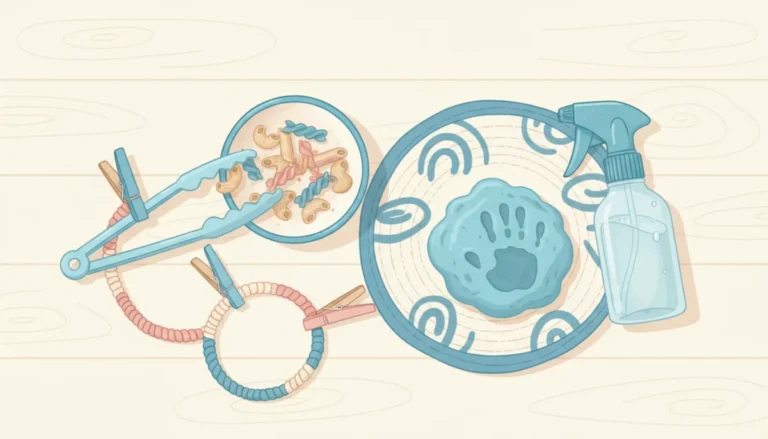
Almost every item on the checklist is one of those four things in a particular costume. That is good news, because it means you do not need to practice fifty separate skills. Play that builds the four foundations, from cutting and play dough to climbing and threading, lifts the whole list at once.
What to do if your child is behind
First, look at practice. A child who rarely uses their hands for play will be behind on this list regardless of ability. Increase hands-on time: play dough, cutting, threading, cooking, building, drawing, climbing. Our list of 15 fine motor activities at home uses things you already own, and our guide to crossing the midline covers a related foundation.
Second, check the basics: seating with feet flat, tools sized for small hands, short sessions, and no pressure.
Third, give it time. Recheck in two or three months. Most gaps close with practice.
Fourth, ask for help if the gap is wide or persistent. Talk to your child’s teacher or pediatrician if your child is at least a year behind across several areas, has no dominant hand by five and a half, avoids fine motor tasks strongly, or also has difficulty with gross motor skills like running, climbing and catching. Pediatric occupational therapists specialize in exactly this, and earlier support is easier and more effective.
To build the skills on this list through play, see our easy paper crafts for preschoolers, teaching kids to use glue and DIY photo booth props.
Frequently asked questions
What are fine motor skills?
Fine motor skills are the small, coordinated movements of the hands and fingers used for tasks like dressing, eating, drawing, cutting and writing.
What fine motor skills should a 5-year-old have?
By the end of age five, most children can dress themselves, write their name, copy most capital letters, cut out simple shapes, draw a person with details and hold a pencil with a tripod grasp.
When should I worry about my child’s fine motor skills?
If your child is well behind on many items across several areas, has no hand preference by five and a half, or avoids hand tasks strongly and consistently, ask a teacher or pediatrician for advice.
How can I improve my child’s fine motor skills at home?
Daily hands-on play: play dough, cutting, threading, building, cooking and drawing. Short, frequent, playful practice works better than worksheets.