Your neighbor’s four-year-old writes her whole name. Yours would rather run laps around the yard than pick up a crayon. It is hard not to compare, and even harder not to worry.
Here is the reassuring truth: learning to write is not a race, and an early start is not an advantage if the hand is not ready. Handwriting rests on a set of physical and visual skills that develop through play over several years. When those skills are in place, letters come quickly. When they are not, early pushing mostly produces frustration and awkward habits that are hard to undo.
This guide will help you see where your child is, what to do at each stage, and when it makes sense to ask for help.
What “ready to write” really means
Writing a letter looks simple. For a young child it is a complicated job. She has to sit steadily, hold a thin tool with three fingers, press neither too hard nor too softly, remember what the letter looks like, know where to start, and steer the pencil in the right direction, all at once.
Being ready means that the pieces underneath are strong enough: a stable body, capable hands, eyes and hands that work together, and an interest in making marks that mean something. Teachers and therapists call this bundle graphomotor skills. Age alone tells you very little. Two healthy five-year-olds can be more than a year apart in these skills, and both are doing fine.
Signs of readiness
You do not need every item on this list. The more you see, the smoother writing is likely to go.
In the body
- Sits at a table for five to ten minutes without sliding off the chair or lying on the table
- Uses one hand more than the other for drawing, eating, and brushing teeth
- Uses the other hand to hold the paper still
In the hands
- Holds a crayon with the fingers instead of a fist
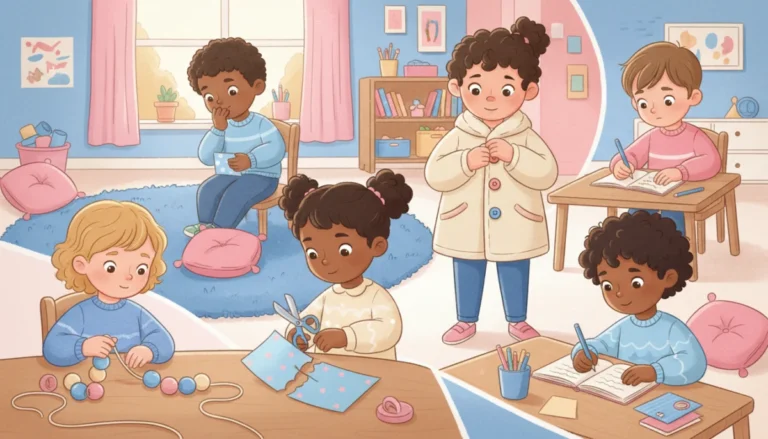
- Snips with child scissors, builds with small bricks, threads large beads
- Manages simple buttons, zippers, or snack containers
On paper
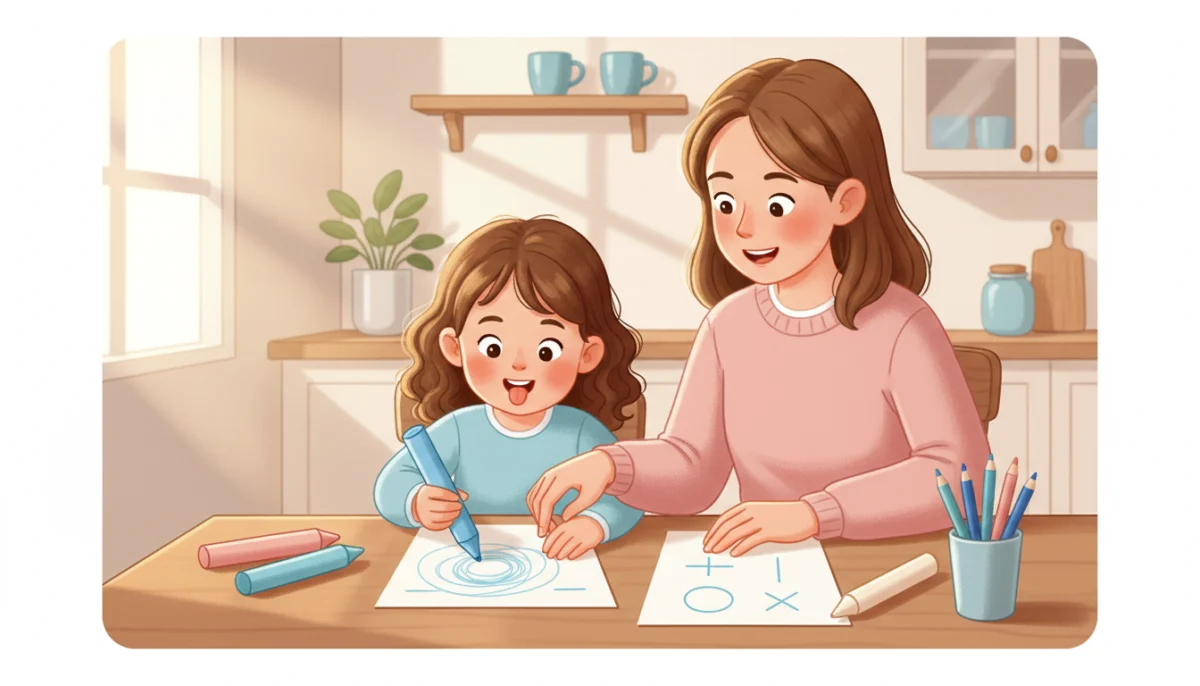
- Draws lines down and across on purpose, and a circle that more or less closes
- Copies a cross, and later a square
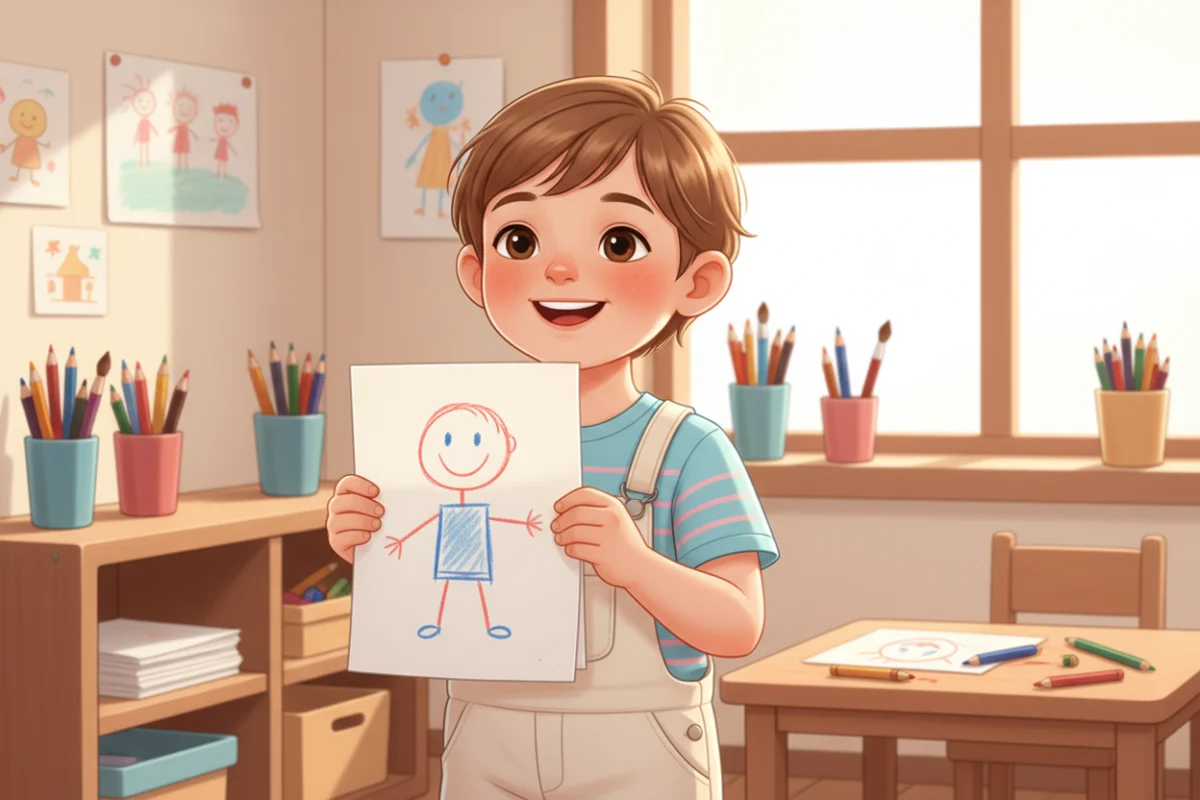
- Draws a person with a head, body, arms, and legs
- Colors mostly within a large shape
In the mind
- Recognizes some letters, especially those in their own name
- Pretends to write: shopping lists, signs, “letters” to grandparents
- Asks how to write a word, or notices print around them
That last group matters as much as the others. A child who wants to write will practice willingly. A child who does not see the point will resist, however capable the hands.
What to expect at each age
These are typical ranges, and plenty of children are earlier or later.
Age 3
Scribbles with energy, begins to imitate lines and circles, and holds crayons in many different ways. The best “writing practice” at this age is playdough, painting, stickers, puzzles, and climbing.
Age 4
Copies a circle and a cross, draws simple people, begins to hold a crayon with three or four fingers, and may try the first letter of their name. Keep everything playful and large.
Age 5
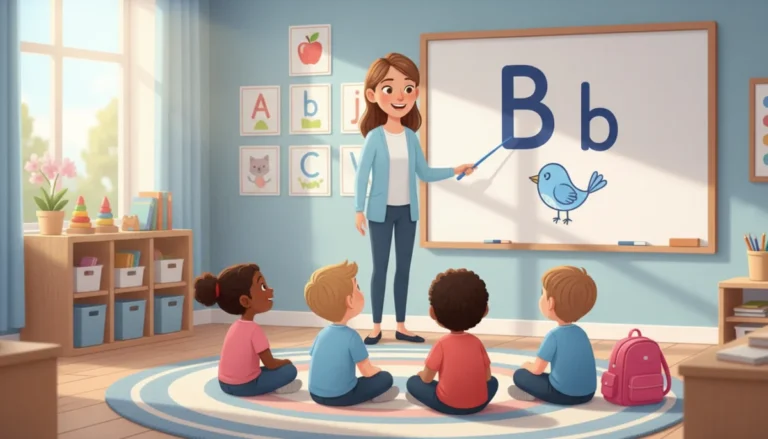
Copies a square and starts on diagonal lines. Many children write their first name, often in capitals and sometimes with letters reversed or out of order. All of that is normal. Kindergarten will teach letters step by step.
Age 6
Forms most letters and numbers, begins to write on lines, and starts to write short words and sentences. Reversals of letters like b and d are still common and usually fade during first grade.
If your child is not ready yet
Waiting does not mean doing nothing. It means building the foundation in ways that do not look like writing at all.
- Build strength through play. Playdough, climbing, hanging from monkey bars, carrying groceries, digging in sand, and squeezing sponges in the bath all strengthen the shoulders, arms, and hands.
- Offer tools for the fingers. Tongs for serving salad, clothespins for hanging up socks, stickers, lacing cards, and building bricks. You will find many more in our list of fine motor activities at home.
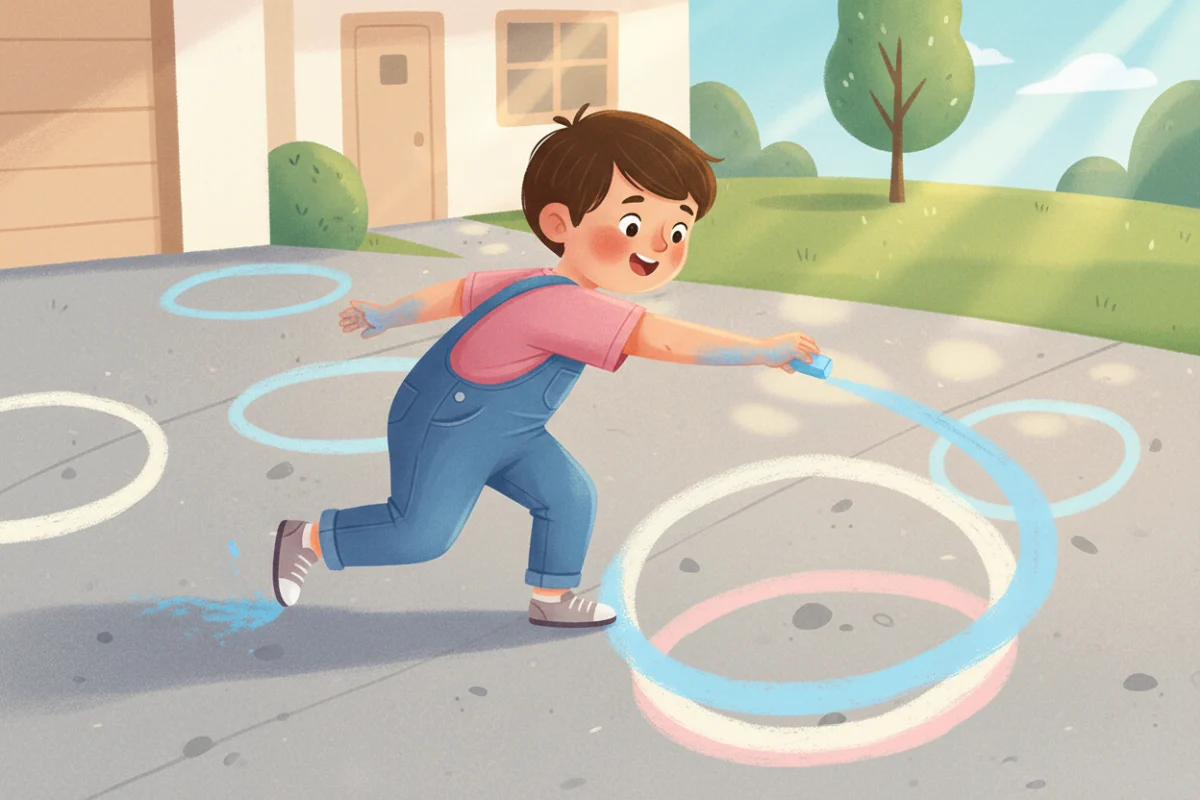
- Draw big. Sidewalk chalk, an easel, a roll of paper taped to the wall, a stick in wet sand. Big movements teach the directions that small letters need later.
- Use short crayons. Broken crayons and small pieces of chalk gently encourage a fingertip hold. More tips are in our guide on how to help your child hold a pencil.
- Draw together. Roads for toy cars, rain falling from clouds, spots on a ladybug, a fence around a farm. Without knowing it, your child is practicing the lines and circles that letters are made of.
- Read every day. Children who love books want to know how writing works.
If your child is ready and eager
Follow their lead, and keep a few principles in mind.
- Start with their name. It is the most interesting word in the world to them. Write it with a capital first letter and lowercase letters after that, as they will at school.
- Show how, not just what. Letters start at the top. Write the letter slowly while your child watches, then let them try. The starting point is the detail that matters most.
- Think big, then small. A whiteboard or a large sheet of paper before lined notebooks.
- Keep it short. Five happy minutes is plenty. Stop before it becomes a chore.
- Give writing a purpose. Birthday cards, labels for the toy bins, a sign for the bedroom door, a menu for the family restaurant.
- Use worksheets wisely. Tracing pages can be helpful for a child who enjoys them. Sit alongside for the first few lines to make sure the strokes start at the top, and do not let worksheets replace drawing and play.
- Praise effort and detail. “You started that T right at the top” is more useful than “good job.”
What not to do
- Do not compare. Siblings, cousins, and classmates all have their own timetable.
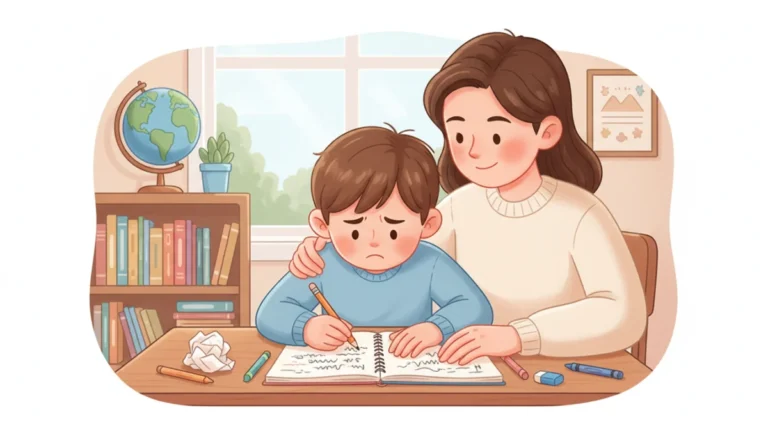
- Do not drill. Long, forced practice teaches a child that writing is unpleasant.
- Do not constantly correct the grip. Change the tools and the activities instead. Nagging creates tension, and tension makes writing worse.
- Do not panic over reversals. Backward letters are typical until about age 7.
- Do not worry about left-handedness. It is a normal variation. Never try to switch a child’s hand. We have a separate guide to helping a left-handed child write.
When to ask for help
Trust your instincts, and talk to your child’s teacher or pediatrician if you notice several of the following, and they are not improving over a few months.
- By age 4, no interest in drawing at all, or strong avoidance of crayons, puzzles, and other hand activities
- By age 5, a fisted grip, no clear hand preference, or difficulty copying a circle or a cross
- By age 6, great difficulty forming letters in spite of teaching, or writing that causes pain or tears
- At any age, a loss of skills the child used to have, or a noticeable difference between the two sides of the body
Teachers see many children of the same age and can tell you how your child compares with the typical range. A pediatrician can refer you to an occupational therapist, who can assess what is going on and suggest specific activities. Asking early is never an overreaction. This article is general information and cannot replace advice from a professional who knows your child.
Once the readiness signs are in place, the natural first project is teaching your child to write their name. For a broader picture of what hands can do at each age, see our fine motor skills checklist by age.
Frequently asked questions
At what age should a child write their name?
Many children write their first name between the ages of 4 and 5 and a half, often in capitals. Some do it earlier, and some only in kindergarten. Both are within the normal range.
Should I teach my preschooler to write before kindergarten?
You do not need to. Strong hands, confident drawing, and an interest in letters are the best preparation. If your child asks to write, show them how, and keep it light.
My child hates coloring. Is that a bad sign?
Not on its own. Some children simply prefer active play. Offer other hand-building activities, like building bricks, playdough, and helping in the kitchen, and try drawing in new ways, such as chalk outside or painting with water.
Are tracing apps helpful?
They can teach the direction of a letter, but a finger on glass does not build pencil control. Treat them as an occasional extra, not as the main practice.