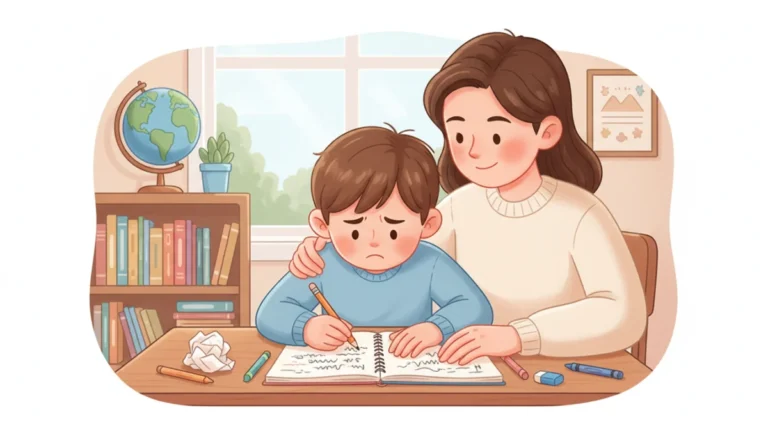
A kindergartener writes “bog” for “dog,” reads “bad” as “dab,” and flips the number 3 like a capital E. A parent sees this and worries about dyslexia. A teacher sees it and reaches for a b/d poster. Both reactions are understandable, and both usually miss what is really going on.
Letter reversals are one of the most common handwriting concerns in the early grades and one of the most misunderstood. This article explains why they happen, when they stop being normal, what helps, and, just as importantly, what makes them worse.
Why young children reverse letters
For the first several years of life, the brain treats mirror images as the same thing. This is useful. A cup is still a cup when it faces the other way. A dog is the same dog seen from the left or the right. Children learn object constancy early and it serves them well.
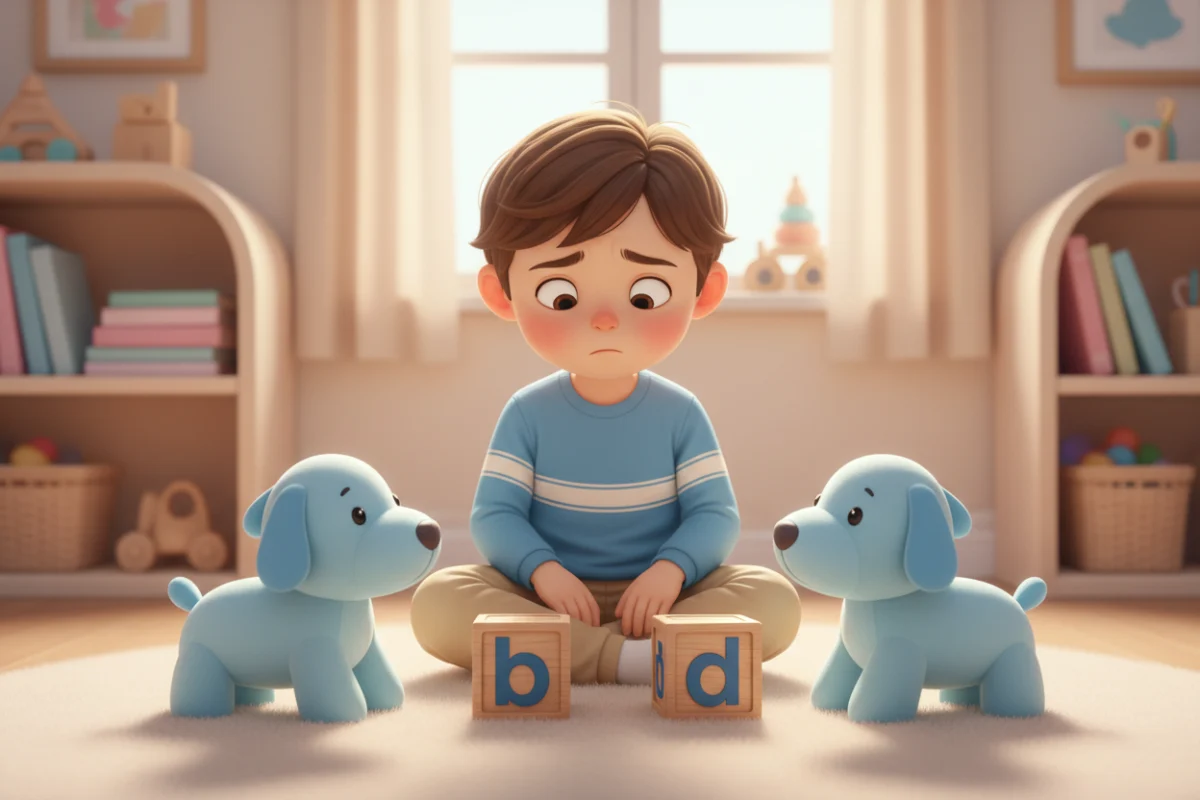
Letters break that rule. A b and a d are the same shape facing different directions, and they mean different things. A child has to learn that, for this one category of objects, direction matters. That takes time and explicit teaching. Until the lesson sticks, the brain does what it has always done and treats b and d as interchangeable.
Reversals are therefore a normal part of development, not a sign of a problem, for most children up to about age seven. They are especially common in children who are still building the visual-motor skills covered in our guide to graphomotor skills.
When reversals are typical and when to look closer
- Ages 4 to 5: frequent reversals of letters and numbers are expected. Many children write their name with mirrored letters.
- Age 6 (kindergarten to first grade): reversals are still common, especially b/d, p/q and the numbers 3, 5 and 7. They should be decreasing.
- Age 7 (end of first grade into second grade): occasional reversals in fast writing are still normal. Frequent reversals in careful writing are worth noting.
- Age 8 and up: persistent reversals, especially combined with slow reading, difficulty with letter sounds and trouble with sequencing, justify a conversation with the reading specialist or a formal screening.
Reversals alone are not a reliable sign of dyslexia. Dyslexia is a difficulty with language sounds and decoding, and many children with dyslexia do not reverse letters more than their peers. If you are concerned, look at the whole picture, not the b and d.
What does not help
Several common fixes either do nothing or actively increase confusion.
The b/d poster on the wall is the classic example. Putting b and d side by side, in the same font, at the same size, invites the child to compare two shapes that they already see as the same. The poster becomes wallpaper within a week.
Teaching b and d at the same time has the same problem. If two forms are introduced together, the child stores them together and mixes them up. Any handwriting sequence worth using separates them by weeks. See our guide to teaching letter formation for a grouping that keeps them apart.
Repeated correction with a red pen teaches the child that they are bad at writing. It does not teach which letter is which.
Making the child “look carefully” assumes the problem is attention. It usually is not. The child looks and sees the same shape.
What actually helps
The fixes that work all do one thing: they attach the direction of the letter to something the child already knows well, and they involve movement, not just looking.
Teach through formation, not shape
The most reliable fix is a consistent stroke sequence with verbal cues. If b is always “big line down, bounce up and around,” and d is always “magic c, then up tall and down,” the two letters are produced by different movements. The hand remembers the movement even when the eye cannot tell the shapes apart.
This is why handwriting programs that teach formation explicitly see fewer reversals than programs that rely on tracing.
Anchor to a known letter
Teach d as part of the c-family: make a c, then go up and down. A child who can already write c has a built-in anchor. Teach b as part of the tall-line family: start with l, then add the belly. The anchors are different, so the letters stay different.
Use the body
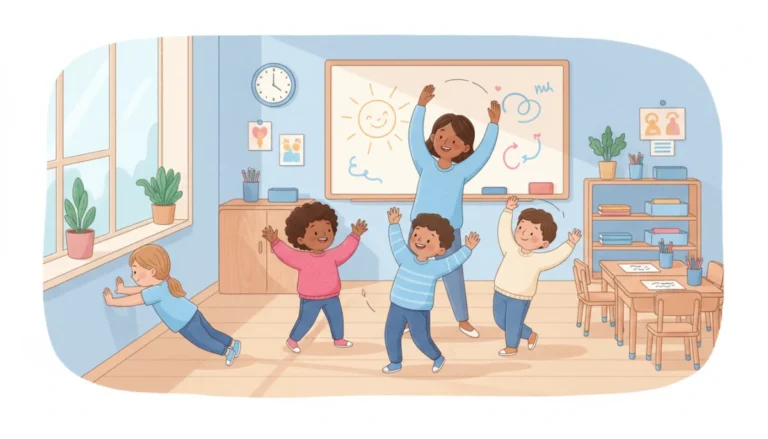
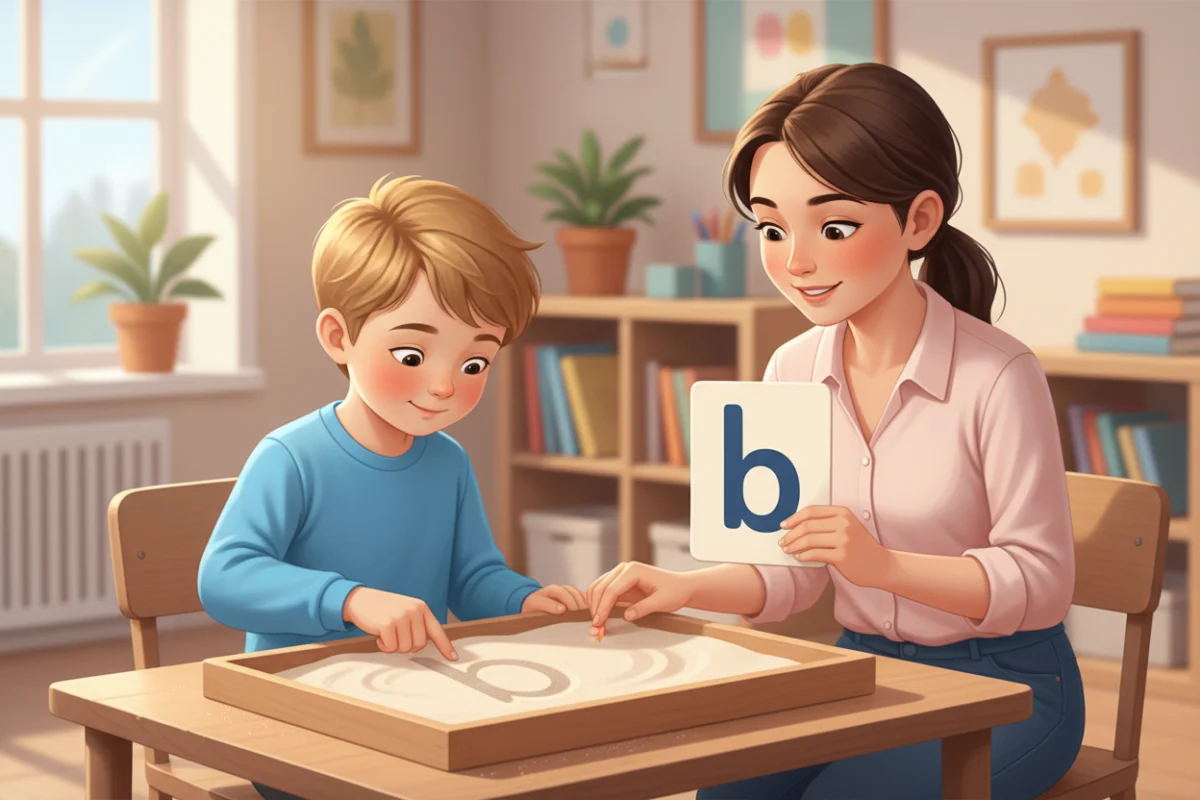
Have children make the letters with their whole body. A b is a straight-standing person with a belly in front. Air-writing the letter large, forming it in sand or shaving cream, and tracing it on the back of a partner all build a motor memory that a worksheet cannot.
Multisensory, one letter at a time
When a child is stuck on a particular reversal, work on one letter only for several days. Trace it, write it large, say the cue every time, find it in books, build it with play dough. Do not mention the other letter. When the first is solid, introduce the second the same way.
Cues for reading
For reading rather than writing, a hand cue can help: both fists held up with thumbs raised make a b on the left and a d on the right, spelling “bed.” Some children like it and some do not. Offer it as a tool, not a rule.
A two-week plan for a stubborn b/d reversal
If one child keeps flipping b and d after the whole-class teaching, try this. Week one is d only. Every day, the child writes a row of c, then turns each c into a d while saying the cue. Add a short list of d words to find in a familiar book. Do not correct any b during this week, and do not mention it. Week two is b only, with the same routine starting from l. In week three, mix the two in dictation of single words and see what happens. Most children come through with the reversal much reduced, because each letter now has its own movement and its own anchor.
Numbers reverse too
Number reversals, especially 3, 5, 7 and 9, follow the same pattern and respond to the same fixes. Teach the formation with a cue (“5: down, around, hat on top”), practice large, and separate the confusing pairs in time. Do not expect number reversals to vanish before letter reversals do.
What to tell families
Tell families that reversals are normal at this age, that you are teaching the letters in a way that separates them, and that the best thing to do at home is to use the same verbal cues and to avoid drilling. Share the cues in writing so parents use the same words. If a child is still reversing frequently at the end of second grade, or if there are other reading concerns, that is the moment to involve a specialist.
Frequently asked questions
At what age should letter reversals stop?
Most children stop reversing letters in careful writing by age seven or the end of first grade. Occasional reversals in fast writing can continue into second grade.
Are letter reversals a sign of dyslexia?
Not by themselves. Reversals are a normal developmental stage. Dyslexia involves difficulty with language sounds and decoding, and is identified through a broader assessment.
How do I fix b and d reversals?
Teach the two letters at different times with different verbal cues and different starting strokes, anchor each to a letter the child already knows, and practice with large movements rather than small tracing.
Should I use a b/d poster?
Side-by-side posters tend not to help and can reinforce the confusion. If you want a visual, show each letter separately with its formation cue and the anchor word.