Ask three kindergarten teachers whether to start with uppercase or lowercase letters and you will get three confident answers. The reading specialist wants lowercase, because that is what children see in books. The occupational therapist wants uppercase, because the strokes are simpler. The veteran teacher does whatever the curriculum says.
All three have a point. This article lays out the arguments, summarizes what the research actually supports, and suggests a sequence that respects both reading and handwriting goals.
The case for uppercase first
The strongest argument for uppercase is motor. Capital letters are built from a small set of simple strokes: vertical lines, horizontal lines, diagonals and big curves. Every capital starts at the top. None of them dip below the baseline. There are no tricky reversals within the set except for a few mirrored pairs, and those are less confusing than b, d, p and q.
That is exactly the stroke set children learn in the pre-writing strokes sequence. A four-year-old who can draw a vertical line, a horizontal line and a circle can already write L, T, O and a dozen more capitals with a little help. Lowercase letters, by contrast, demand smaller movements, retracing, and a mix of sizes that many preschoolers cannot yet control.
Most handwriting programs used in occupational therapy, and many used in schools, teach capitals first for this reason. Early success matters. A child who can write recognizable letters in the first weeks feels like a writer.
The case for lowercase first
The argument for lowercase is about reading and use. Around 95 percent of the letters in any English text are lowercase. Children need to recognize lowercase forms to read, and writing a letter is one of the best ways to learn to recognize it. If a child spends a year forming capitals, they are practicing forms they will rarely read.
There is also a habit concern. Children who learn capitals first sometimes keep using them in the middle of words long after they know lowercase, because capitals feel easier. Teachers of first and second grade know this pattern well. It shows up in the messy handwriting we describe in our guide to messy handwriting in first and second grade.
Some literacy-focused programs therefore introduce lowercase from the start, or pair each capital with its lowercase partner immediately.
What the research actually shows
The honest summary is that the research does not crown a clear winner. Studies on letter knowledge show that children generally learn uppercase names first, partly because that is what they see on toys and in their own names. Studies on handwriting show that uppercase forms are easier to produce for younger children. Studies on reading show that lowercase recognition matters more for decoding.
What the evidence does support quite consistently is this:
- Explicit teaching of letter formation, with a consistent stroke sequence and verbal cues, beats incidental exposure. The order matters less than the method.
- Teaching letters in groups that share strokes is more effective than teaching them alphabetically.
- Handwriting practice improves letter recognition, and letter recognition supports reading. The two are not in competition.
- Children benefit from knowing both forms of a letter as a pair, rather than learning two separate alphabets.
In other words, the “which first” argument is less important than whether letters are taught systematically at all.
A sequence that satisfies both camps
Here is a practical approach that works in pre-K through kindergarten and respects motor readiness without delaying reading.
Pre-K: capitals through play, names and strokes
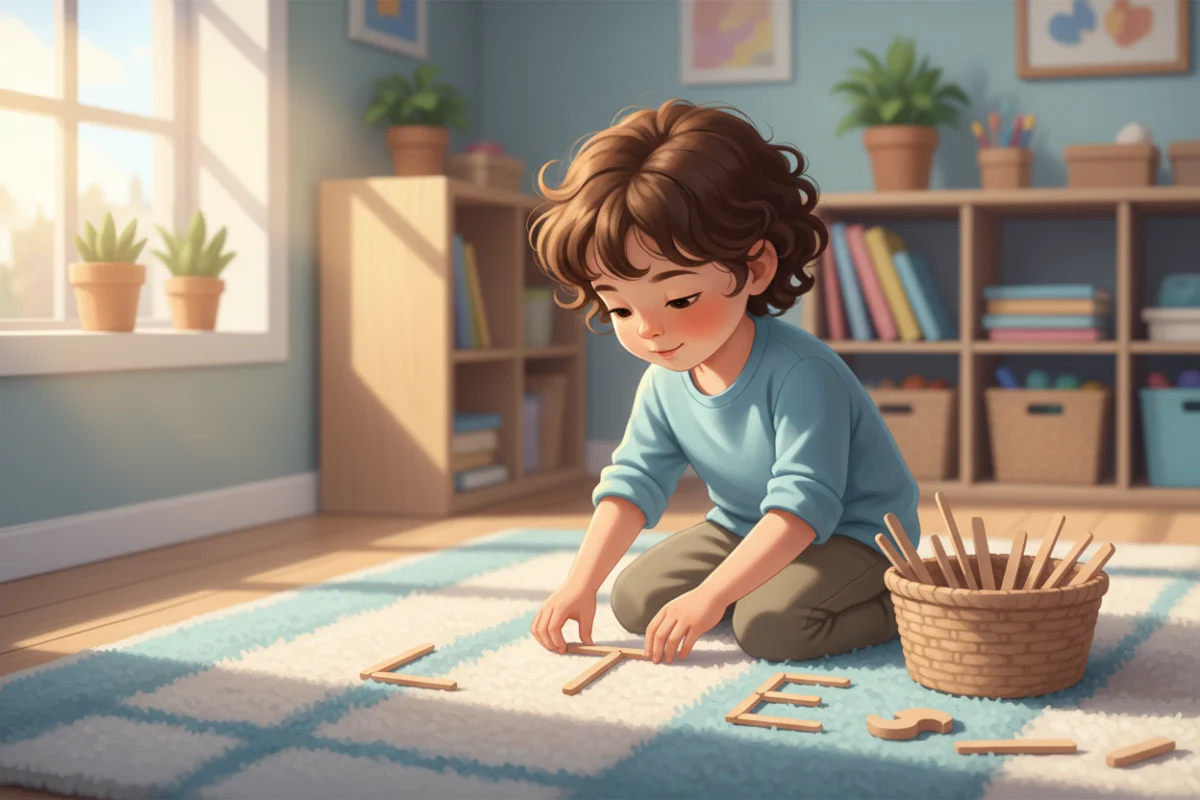
Focus on pre-writing strokes and on the letters in each child’s own name, in whichever case those letters appear. Introduce capitals informally through play: building letters with sticks and curves, forming them in sand, tracing them large on a vertical surface. Children who are ready will start to write them. Do not push lowercase formation yet, but make sure children see and hear both forms constantly.
Kindergarten, first half: capitals formally, lowercase in parallel
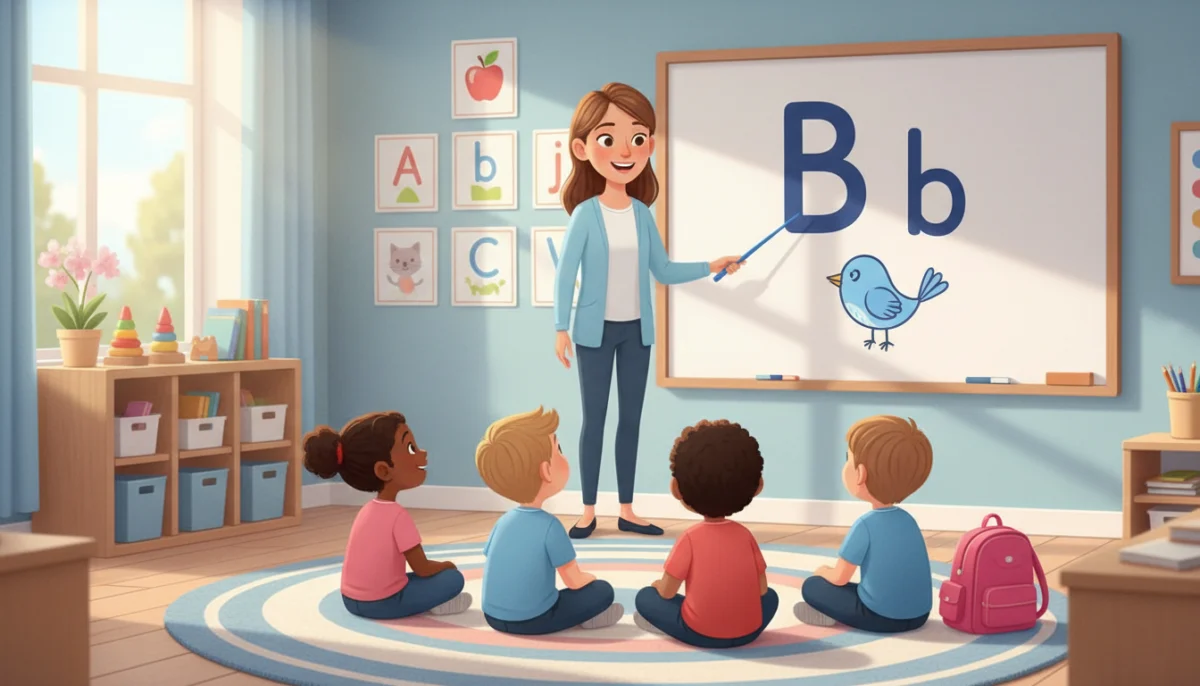
Teach the formal stroke sequence for capitals, grouped by stroke type rather than alphabetically. At the same time, introduce the lowercase partner of every capital for recognition and matching. When a child writes a capital B, they say the letter and see the lowercase b next to it.
Kindergarten, second half: lowercase formally
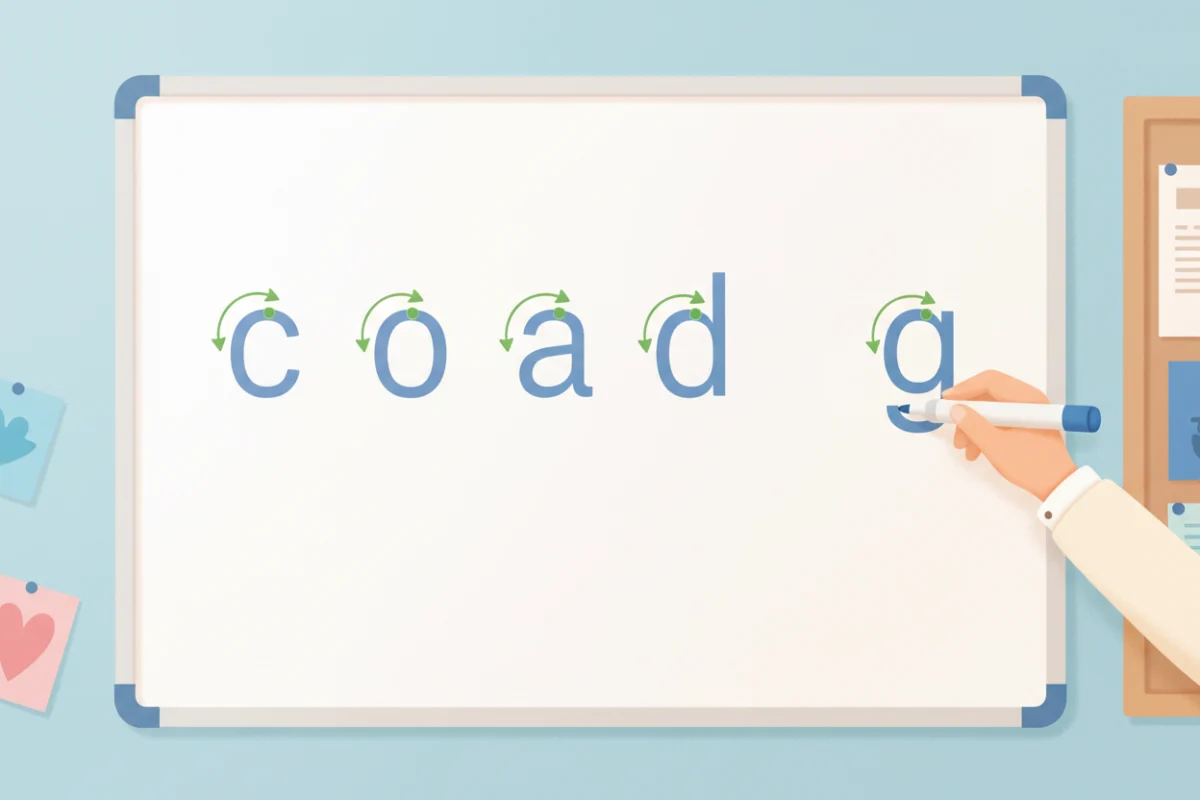
Once most children can form capitals with correct starting points and stroke direction, move the formal handwriting instruction to lowercase. Group by stroke again: the c-family (c, a, d, g, o, q), the tall stick letters (l, t, i), the hump letters (n, m, h, r), and so on. Our guide to teaching letter formation has a full grouping.
First grade: lowercase as the default
By first grade, lowercase should be the default in all writing, with capitals reserved for their proper uses. Correct capital-in-the-middle habits early and kindly, with a quick reminder rather than a red pen.
Why letter grouping beats alphabetical order
Whatever case you start with, avoid teaching letters in ABC order for handwriting. Alphabetical order puts easy and hard letters side by side and hides the shared strokes that make formation predictable. Grouping by stroke lets children reuse the movement they just learned. It also lets you introduce the visually confusing letters (b and d, p and q) far apart in time, which reduces reversals.
The same logic applies to lowercase. Starting with c, then o, a, d and g, gives children five letters from one movement. Starting with a, then b, then c, gives them three unrelated movements.
What to tell families
Parents often ask why their child is writing in capitals when the older sibling learned lowercase first, or the reverse. A short explanation helps: capitals are easier to form, lowercase are more useful to read, and your child will learn both. Suggest that at home they simply use the same verbal cues you use in class, and that they help with fine motor activities at home rather than extra worksheets.
A note on children’s names
Names are the one place where the case debate resolves itself. A child’s name is the first word most of them want to write, and it should be written the way it appears in print: one capital, then lowercase. Do not make children write their whole name in capitals just because capitals are easier. It creates a habit that is hard to undo, and it means the name they see on their cubby never matches the name they write.
Instead, teach the capital first letter formally and let the lowercase letters in the name be the first lowercase forms the child learns, even if they come early in the sequence. Names are motivating enough to carry a little extra difficulty.
Frequently asked questions
Should preschoolers learn uppercase or lowercase first?
Most preschoolers are motor-ready for capitals before lowercase, so capitals are the sensible place to start formal formation. They should still see and hear lowercase letters every day.
Is it bad if my kindergartener writes everything in capitals?
Not at this stage. It usually means capitals feel easier. Introduce lowercase formation gradually and model lowercase in shared writing, and the habit fades by first grade.
Which lowercase letters should I teach first?
Start with the c-family: c, o, a, d, g and q. They share a starting movement and give quick success. Follow with l, t and i, then the hump letters n, m, h and r.
Does handwriting really affect reading?
Yes. Forming letters by hand strengthens letter recognition more than typing or tracing alone, and letter recognition is one of the strongest early predictors of reading success.