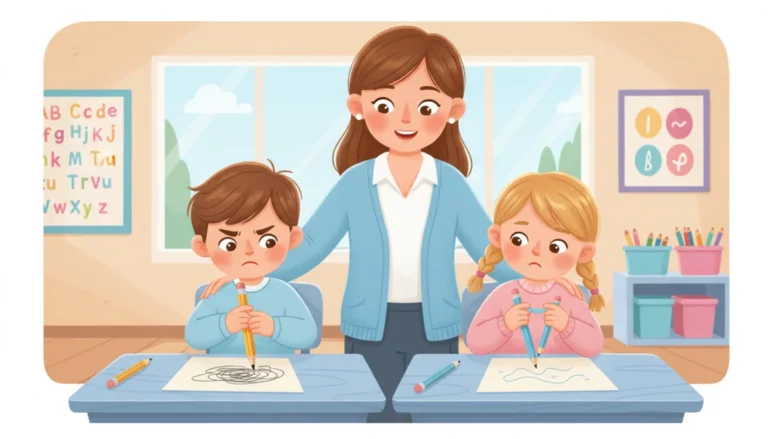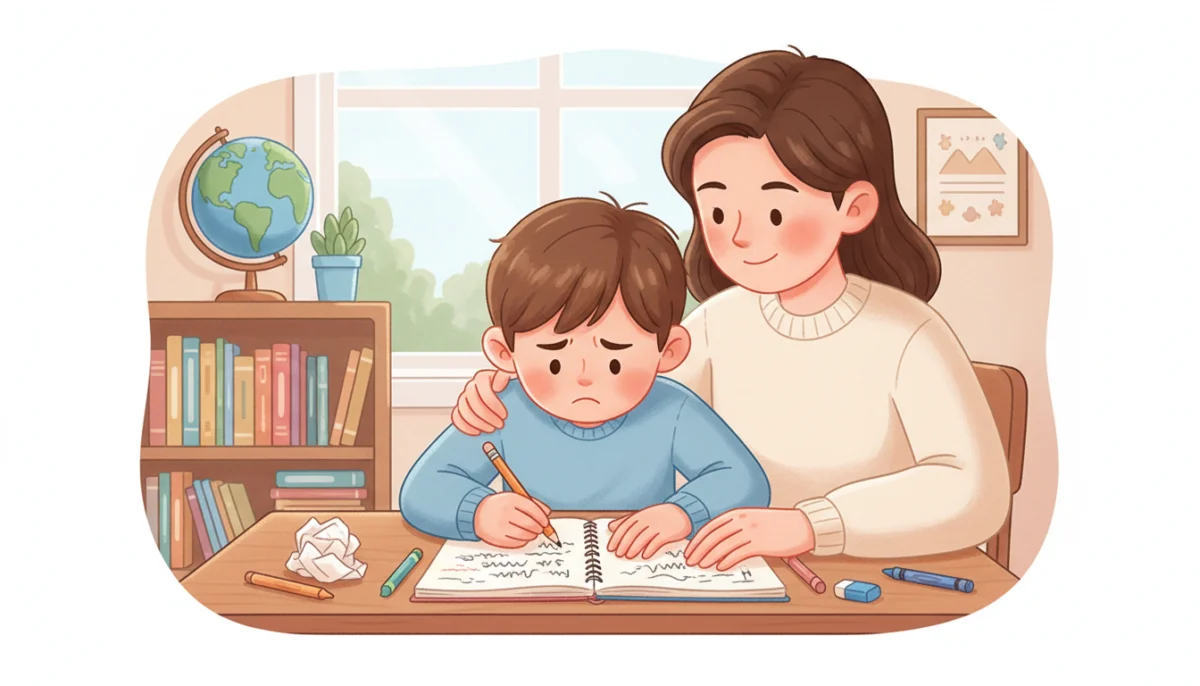
The spelling test comes home and you can barely read it. The letters are different sizes, the words run into each other, and half of the sentence has floated above the line. Your child knows the material. It just does not show on paper.
Messy handwriting in first and second grade is very common, and it is rarely about laziness or not caring. Handwriting is a physical skill, like riding a bike, and when it goes wrong there is nearly always a specific reason. Once you find the reason, you can work on the right thing, and a few minutes a day is usually enough to see a change.
First, what is normal?
Handwriting develops over several years. In first grade, expect large, uneven letters, some reversals, and wobbly spacing. By the end of second grade, most children write letters of a fairly consistent size that sit on the line, with spaces between words, at a reasonable speed. Neatness keeps improving into third and fourth grade.
Also keep in mind that children write more neatly when copying than when they are composing a story. When a child is busy thinking about ideas and spelling, handwriting is the first thing to slip. That is normal, and it is a sign that letter formation is not fully automatic yet.
The most common causes of messy handwriting
1. Letter formation habits
This is the number one cause. Many children form letters in inefficient ways, starting at the bottom, going around the wrong way, or building a letter from separate pieces. The letters may look fine when written slowly, and then fall apart at speed. Watch your child write the alphabet. If many letters start at the bottom, you have probably found the problem.
2. Weak hands and a tired grip
If your child’s writing starts neat and gets worse down the page, or they shake out their hand and complain that it hurts, think strength and endurance. A very tight grip and heavy pressure are other clues. Our guide on how to help your child hold a pencil explains what a comfortable grip looks like.
3. Posture and paper position
A child who slumps, props up their head, kneels on the chair, or writes with the paper straight in front of them is working much harder than necessary. Dangling feet are a surprisingly common culprit.
4. Visual and spatial difficulties
Some children form letters well but cannot organize them on the page. Letters vary wildly in size, float above or sink below the line, and words are crammed together or spread far apart. These children need visual supports more than letter drills.
5. Rushing
Some children race to be finished, and others have thoughts that move faster than their hands. If your child can write neatly when asked to slow down, speed is the issue, not skill.
6. Vision
If your child squints, holds their face very close to the paper, tilts their head, or loses their place when copying, arrange an eye exam. It is a simple thing to rule out.
7. Something more
For a small number of children, handwriting difficulties are part of a bigger picture that may involve motor coordination, attention, or a specific learning difficulty that affects writing, sometimes called dysgraphia. We will come back to when to seek an evaluation.
A five-minute check at home
Ask your child to write their name, the lowercase alphabet from memory, and one sentence. Watch quietly and look for the following.
- Where do letters start? Top or bottom?
- How is the pencil held? Relaxed or clenched? Fingertips or fist?
- How hard are they pressing? Turn the page over and feel for ridges.
- How are they sitting? Are feet on the floor? Is the other hand holding the paper?
- How does it look? Check size, sitting on the line, and spaces between words.
- How do they feel? Are they calm, tense, or tired?
Note the one or two things that stand out most. That is where to begin.
Fixes that match the cause
If formation is the problem
Retrain a few letters at a time, not the whole alphabet. Start with the letters in your child’s name or the ones that are hardest to read. Practice letters that share a movement together, for example c, a, d, g, o, and q, which all begin like a c.
Go big first: a finger on the table, a whiteboard, or chalk outside. Say the movement out loud, such as “start at the top, straight down.” Then move to paper, and write five careful letters, not fifty. Ask your child to circle their best one. Teachers use the same approach, as described in our post on how to teach letter formation.
If strength is the problem
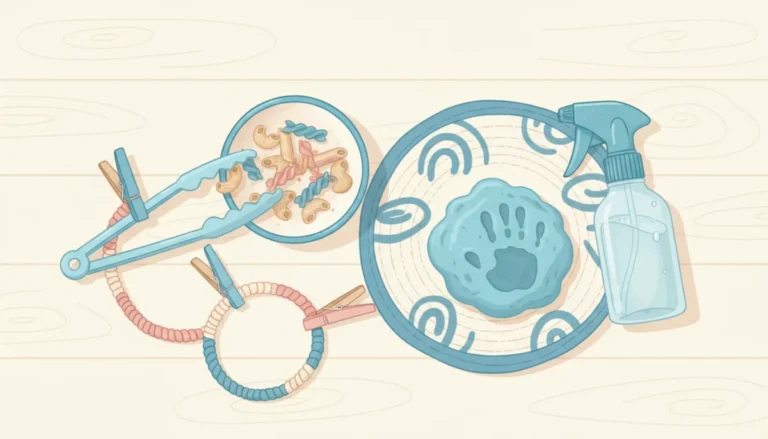
Build the hand away from paper with playdough, building bricks, clothespins, spray bottles, monkey bars, and kitchen jobs. We list fifteen ideas in fine motor activities at home. Offer short pencils, which encourage a fingertip grip. During homework, allow breaks to stretch and shake out the hands.
If posture is the problem
Aim for feet flat on the floor or on a box, hips back in the chair, and a table at about elbow height. Tilt the paper, to the left for right-handers and to the right for left-handers, and remind the helper hand to hold it. A sloped surface, such as a wide ring binder turned sideways, helps many children. Left-handed writers need a few special adjustments, which you can find in our guide to helping a left-handed child write.
If spacing and size are the problem
- Use paper with a dotted middle line, or highlight the bottom half of each line so that short letters have a “home.”
- Sort letters into tall letters like b, d, and h, short letters like a, c, and e, and diving letters like g, j, and p that drop below the line.
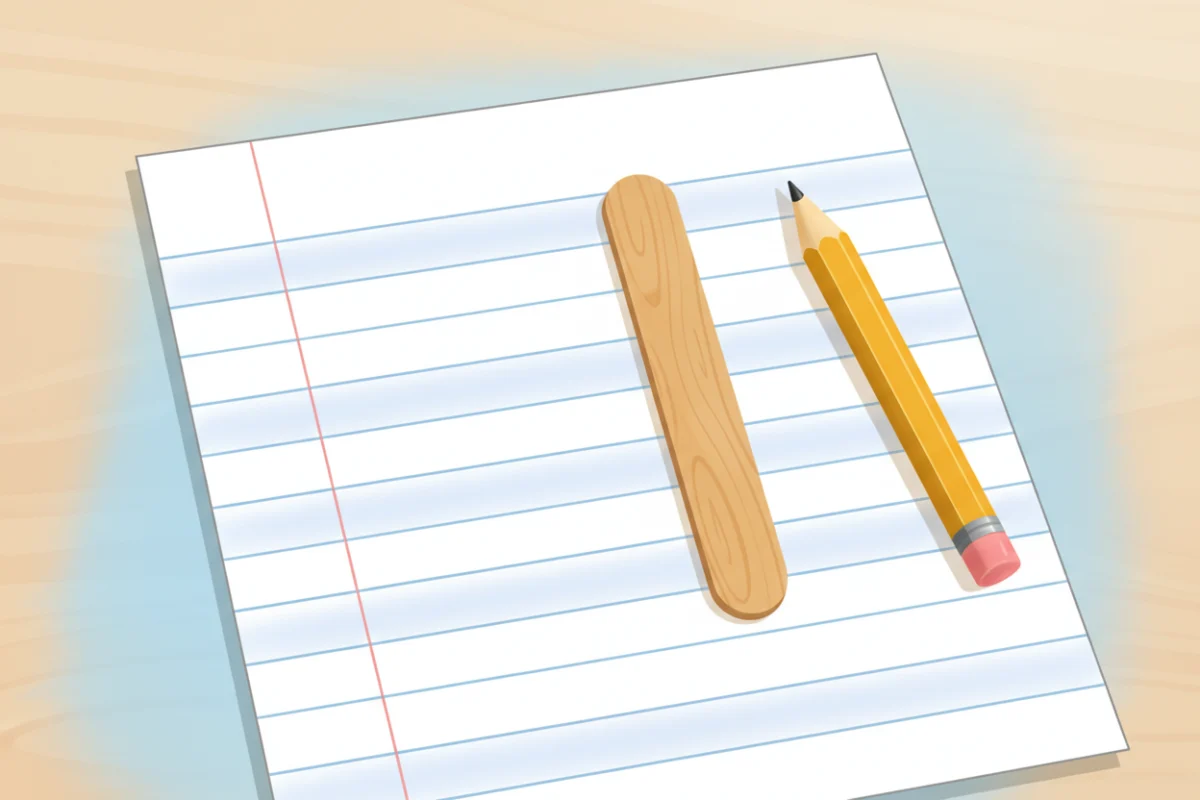
- For spaces between words, use a finger, a craft stick “spaceman,” or a small sticker, then fade it out.
- Try graph paper for math, with one digit per box.
If rushing is the problem
Set a clear and limited goal, for example “the first sentence in your best handwriting.” Ask for a quick self-check of three things: letters on the line, spaces between words, and tall letters tall. Praise the specific detail that went well. And never use extra writing as a punishment, because it teaches children to hate writing.
What practice should look like
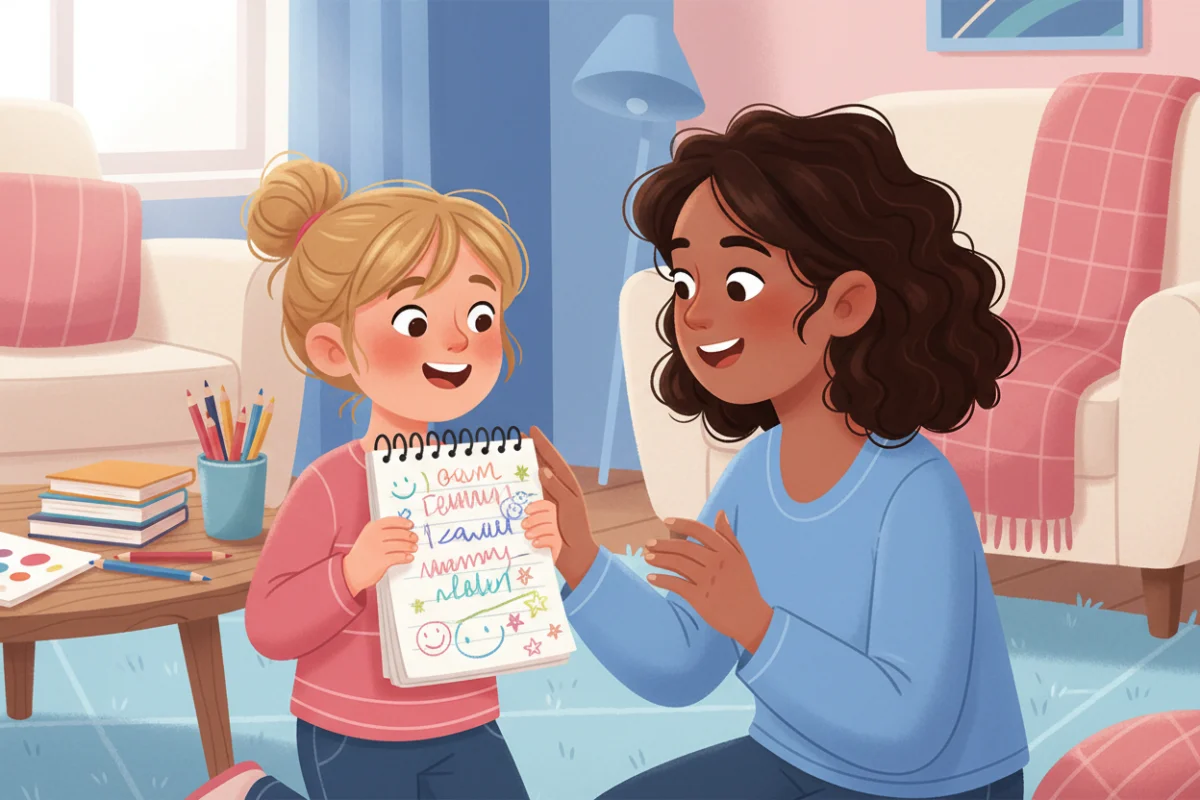
Five to ten minutes a day, most days, works far better than an hour on Sunday. Keep the tone light and end on a success. Give writing a real purpose whenever you can: a note for a grandparent, a shopping list, a comic strip, a sign for the bedroom door, a diary with a lock.
Let your child see their own progress. Keep a dated sample from each month in a folder. Looking back at September’s page in December is wonderfully motivating.
Talk to the teacher
Your child’s teacher sees their writing every day and knows what is typical for the class. Ask which letter style and which line names the school uses, so that your help at home matches. Ask whether the teacher sees the same difficulties at school, and what you could work on together. If writing is holding your child back, simple classroom supports, such as extra time or a pencil grip, can help in the meantime.
When to ask for professional help
Consider asking your pediatrician or the school about an occupational therapy evaluation if you see several of these signs.
- Writing is painful, or causes tears and meltdowns on a regular basis
- There has been little progress after two or three months of steady practice
- Writing is still largely illegible toward the end of second grade
- Your child writes extremely slowly and cannot finish classwork
- There is a big gap between what your child can say and what they can put on paper
- There are other coordination difficulties, for example with buttons, shoelaces, cutlery, or catching a ball
Asking for an evaluation is not an overreaction, and you do not need to wait. Early support works well. This article is general information and is not a diagnosis.
Reversals still showing up in second grade? Our guide to letter reversals explains what helps. Faint or heavy writing is covered in pencil pressure problems.
Frequently asked questions
Is messy handwriting a sign of dysgraphia?
Usually not. Most messy handwriting comes from formation habits, hand strength, or rushing. Dysgraphia is considered when difficulties are significant and persistent in spite of good teaching and practice, and it should be assessed by a professional.
Does handwriting still matter when children will type anyway?
Yes. In the early grades, most schoolwork is still handwritten. When handwriting is automatic, children can focus on what they want to say, and teachers can read what they know.
How much should my child practice?
Five to ten minutes a day is plenty. Short, regular, and cheerful practice beats long sessions.
Should my child learn cursive to fix messy printing?
Some children do find cursive easier, because the letters flow and reversals are less likely. Follow your school’s timing, and make sure the basics of grip, posture, and print formation are in place first.