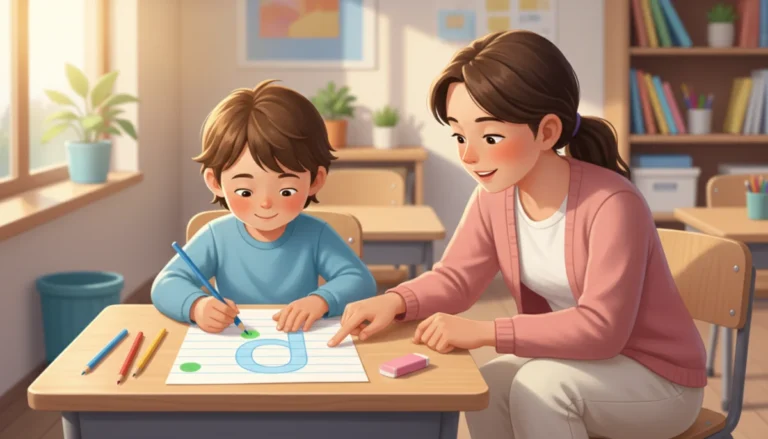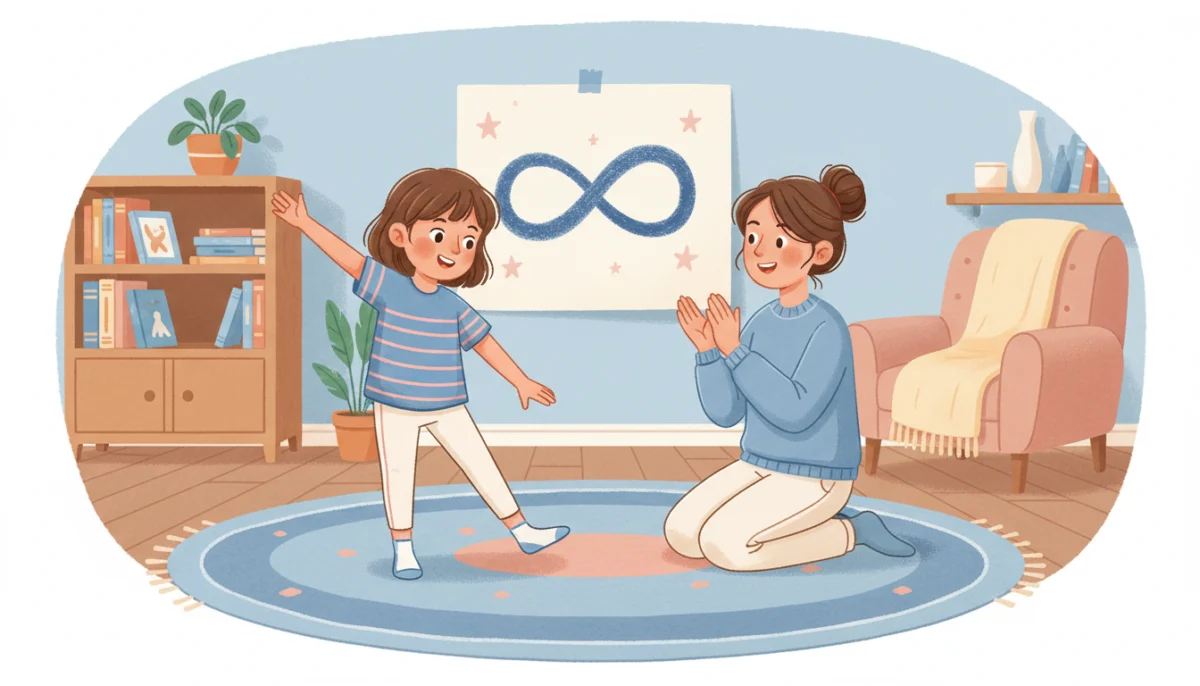
Imagine a line running straight down the middle of your child’s body, from the top of the head to the floor. Crossing the midline means reaching across that line with a hand, a foot or the eyes: right hand to left knee, left hand to right ear, eyes tracking a ball from one side to the other. It sounds trivial. It is one of the quiet foundations of handwriting.
This guide explains what crossing the midline is, why it matters, how to tell if your child is avoiding it, and ten games you can play at home with no special equipment.
Why crossing the midline matters
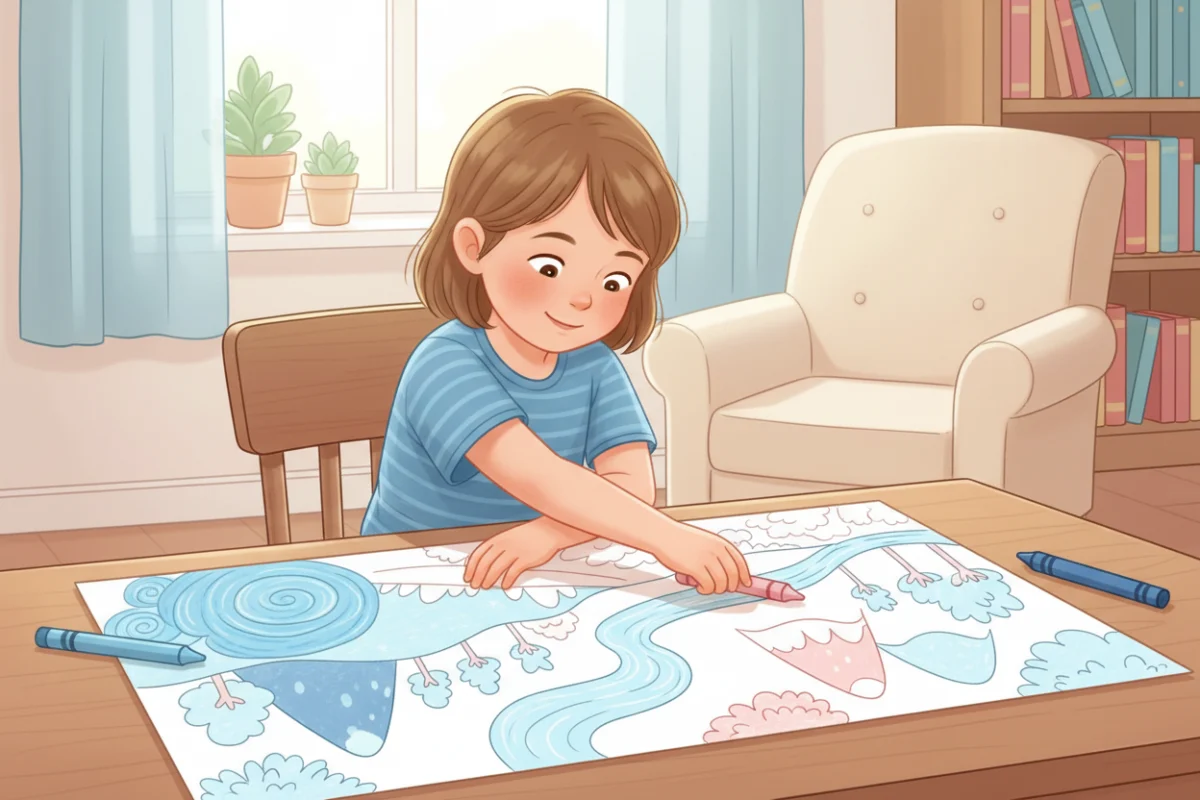
Writing across a page from left to right means the hand has to travel across the body’s center. A child who avoids crossing the midline will often switch hands halfway across the page, twist their body to keep the hand on its own side, or write in a cramped area in front of one shoulder. None of that helps legibility.
Crossing the midline is also tied to hand dominance. The two sides of the brain have to communicate for one hand to take the lead consistently while the other helps. Children who do not cross the midline often have no clear dominant hand by age five or six, which slows down the development of a mature grasp. Our guide to pencil grasp development explains why a consistent hand matters.
Finally, reading and copying depend on the eyes crossing the midline smoothly. A child whose eyes “jump” at the center of a line loses their place, skips words and finds copying from the board exhausting.
How it develops
Babies begin to reach across the body in the first year. Toddlers cross the midline when they scribble in big arcs or stack blocks with one hand. By age three to four, most children reach across freely and are beginning to show a preferred hand. By age five to six, the preferred hand should do most skilled work and the other should hold and steady.
Like every part of graphomotor development, this is a range, not a deadline. But by kindergarten, difficulty with the midline is worth noticing.
Signs your child may be avoiding the midline
- Switches hands during coloring, drawing or eating instead of reaching across.
- Turns the whole body to reach for something on the opposite side.
- Uses the right hand for the right side of the paper and the left hand for the left.
- Has no clear hand preference by age five.
- Struggles to draw a horizontal line all the way across a page.
- Has difficulty with tasks like putting on shoes, doing up a coat or using a knife and fork together.
- Loses their place when reading across a line or copying.
One or two of these on their own mean little. Several together suggest that a little targeted play would help.
10 games to practice crossing the midline
All of these can be played in a few minutes and most children do not realize they are practicing anything.
1. Windmill taps
Stand with feet apart and arms out. Touch the right hand to the left foot, stand up, then the left hand to the right foot. Do it to music and speed up.
2. Sticker hunt
Put stickers on your child’s left arm, left leg and left shoulder and ask them to peel them off with the right hand only. Then swap sides.
3. Giant figure eights
Draw a huge sideways figure eight on paper taped to the wall, or trace one in the air, using one hand and following it with the eyes. Then the other hand. Then both together.
4. Pass the ball around
Sit or stand and pass a ball around the waist, from hand to hand, in one direction and then the other. Add a second ball for a laugh.
5. Toy sorting across the body
Put a pile of small toys on your child’s left side and a basket on the right. Sort using the right hand only. Then reverse. Sit on the floor with legs straight to keep the body from twisting.
6. Streamer dancing
Give your child a ribbon or a scarf and ask them to draw circles, rainbows and figure eights in the air with one hand, crossing over the body as much as possible.
7. Car wash
Have your child “wash” a big window, a wall or the side of the car with a sponge, using long side-to-side strokes with one hand.
8. Simon Says with crossover moves
“Simon says touch your right ear with your left hand.” “Simon says put your left hand on your right knee.” Kids love it and it forces the crossover.
9. Big-paper drawing
Tape a roll of paper on the floor or wall and draw long rainbows, roads and waves that stretch from far left to far right, without moving the feet.
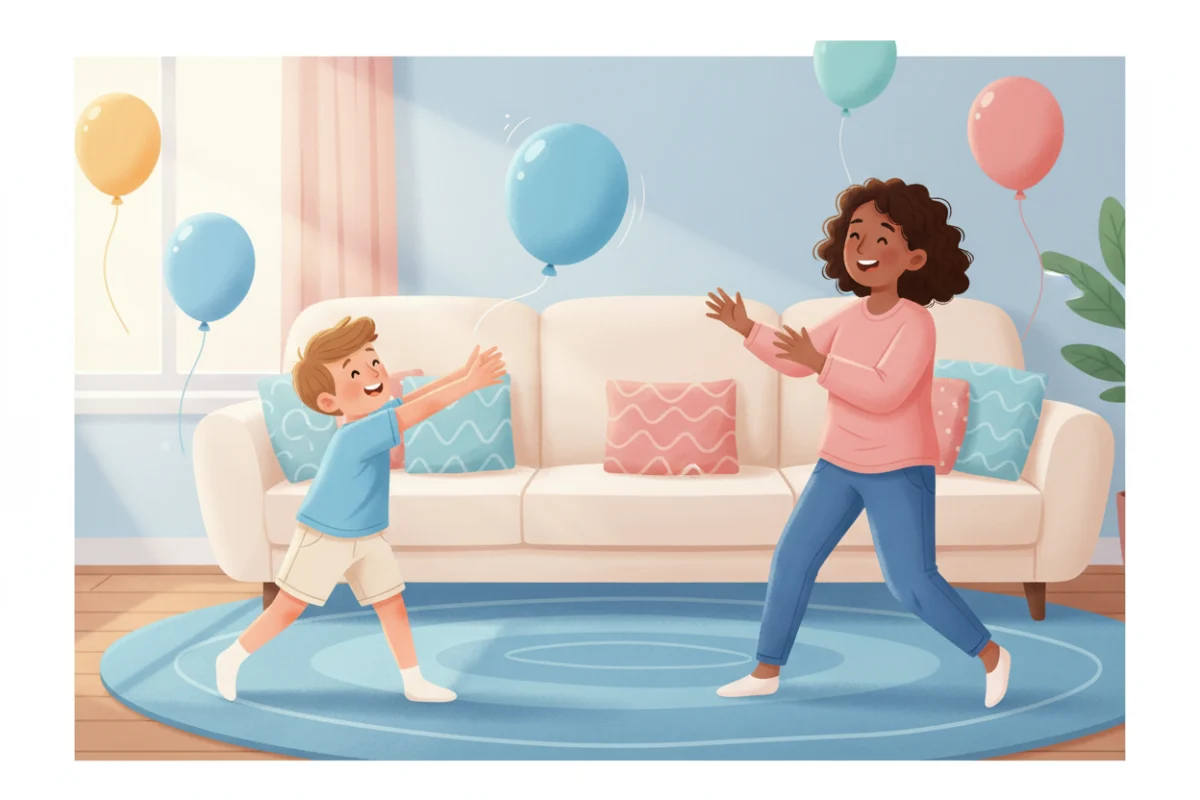
10. Balloon volleyball
Bat a balloon back and forth, and call out which hand to use. Aim the balloon to the “wrong” side so the child has to reach across.
Everyday moments that count
You do not have to schedule any of this. Daily life is full of midline practice if you set it up a little. Hand your child their cup from the opposite side so they reach across. Put the toothpaste on the far side of the sink. Let them stir a big bowl of batter with one hand while holding the bowl with the other. Ask them to help wipe the table with long strokes. Play catch, tag and hopscotch. Let them climb, swing and hang from monkey bars, which all involve both sides of the body working together.
Two things to avoid: do not force a hand preference, and do not turn the games into drills. If your child switches hands, simply set the task up so that reaching across is the natural thing to do, and let the preference emerge on its own.
Bringing it to the table
Once your child crosses the midline freely in play, help it transfer to the desk. Place the paper slightly to the writing-hand side and tilted, so the hand can travel across it naturally. Keep the helper hand on the paper. Encourage long horizontal strokes across the whole page before letters. And keep up the fine motor play at home that builds the rest of the hand.
When to seek help
Ask your pediatrician or a pediatric occupational therapist if your child is five or older and still has no dominant hand, consistently avoids reaching across the body, or shows several of the signs above alongside difficulty with dressing, feeding or play. Midline issues respond well to therapy, and earlier is easier.
Frequently asked questions
What does crossing the midline mean?
It means moving a hand, foot or the eyes across the imaginary line down the center of the body, for example reaching the right hand to the left side.
Why is crossing the midline important for handwriting?
Writing across a page requires the hand to travel over the body’s center. Children who avoid it switch hands, twist or cramp their writing, and often lack a clear dominant hand.
At what age should a child cross the midline?
Children cross the midline in play from toddlerhood and should do so freely by age three to four, with a clear hand preference by age five to six.
Can crossing the midline be improved?
Yes. Simple daily games that involve reaching across the body, like the ten above, make a noticeable difference within weeks for most children.