Thanksgiving is a long weekend with a house full of people, a table that needs decorating and children who need something to do while the kitchen is busy. Paper crafts solve all three. Children make the place cards, the napkin rings and the centerpiece, feel like part of the day, and get a good dose of cutting, gluing and writing along the way.
Here are twelve crafts for ages three to eight, sorted by what they are for: gratitude, turkeys, and the table. Each notes the skill it builds and how to adjust it for younger or older children.
Gratitude crafts
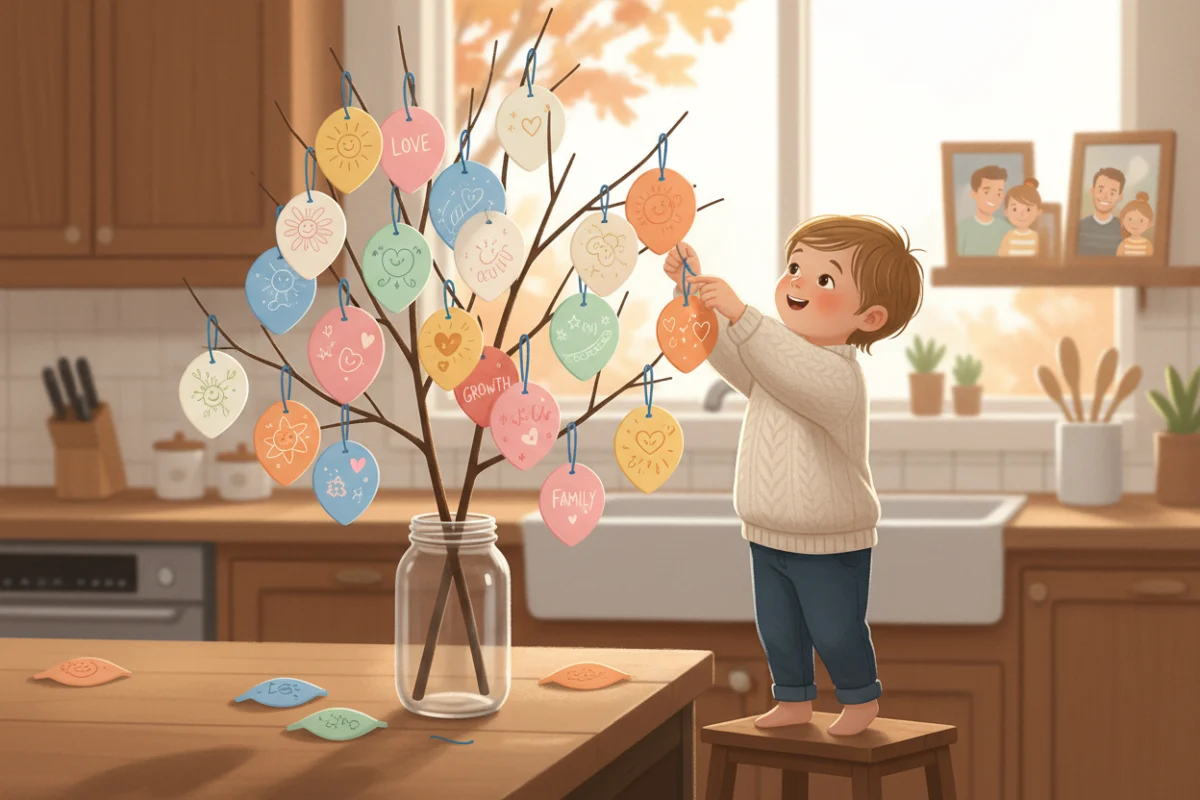
1. Family gratitude tree
Ages 3 and up. Skill: cutting leaves, writing. A bare branch in a jar, or a paper trunk on the wall, and a pile of paper leaves in fall colors. Every family member adds a leaf each day of the week with something they are thankful for. Young children draw, older ones write. On Thanksgiving Day, read the leaves aloud at the table.
2. Thankful placemat
Ages 4 and up. Skill: drawing, writing, laminating. Each child makes a placemat with a drawing of something they are thankful for and their name, covered in clear contact paper or packing tape. Reuse every year and watch the drawings change.
3. Gratitude paper chain
Ages 3 and up. Skill: cutting on a line, gluing. One loop per thankful thing, written or drawn on the strip before it is linked. Hang it across the dining room. Our guide to paper chains and garlands has the method.
Turkey crafts
4. Handprint turkey
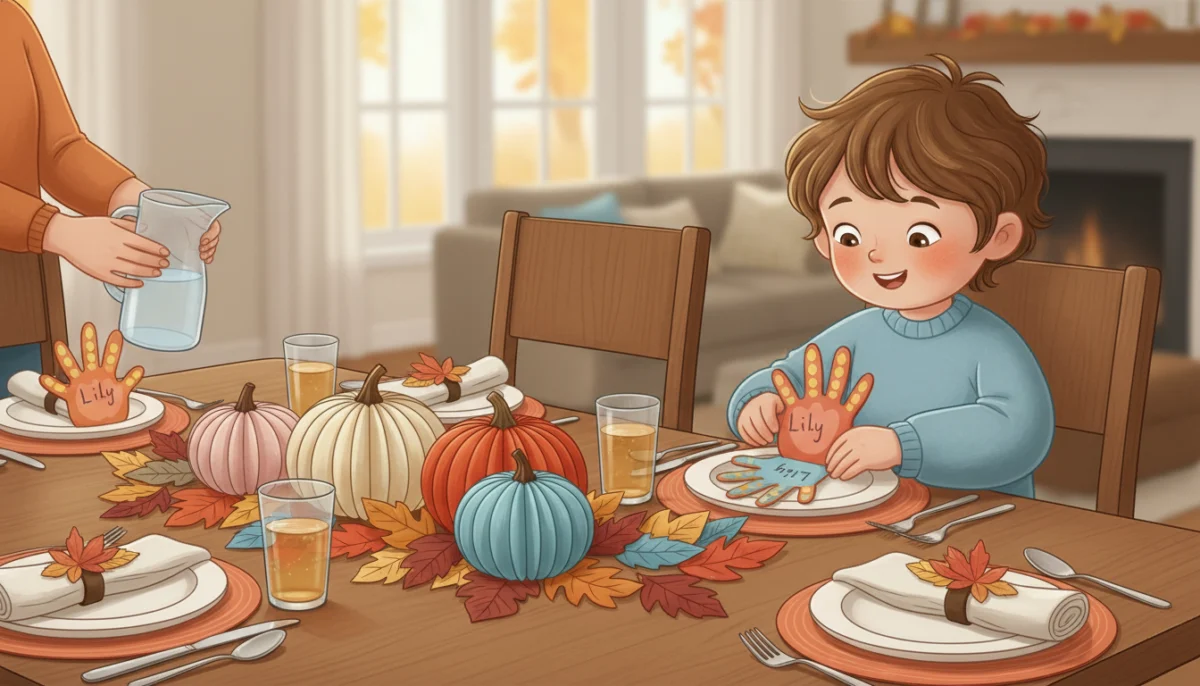
Ages 3 and up. Skill: tracing, cutting, gluing. Trace your child’s hand on brown paper (or let them trace their own), cut it out, add a beak, wattle and legs, and feathers on each finger. Write a thankful word on each feather for older children. Frame the best one.
5. Paper strip turkey
Ages 4 and up. Skill: cutting strips, fanning, gluing. A brown circle body, strips in fall colors fanned behind it, a paper face. Straight-line cutting practice with a big payoff.
6. Pine cone turkey
Ages 3 and up. Skill: pinching, placing. A pine cone body with paper feathers pushed between the scales and a paper head glued to the front. The pushing is good pinch practice.
7. Paper bag turkey puppet
Ages 4 and up. Skill: cutting, gluing, play. A lunch bag with a paper face on the flap and fanned feathers on the back. Put on a show for the guests.
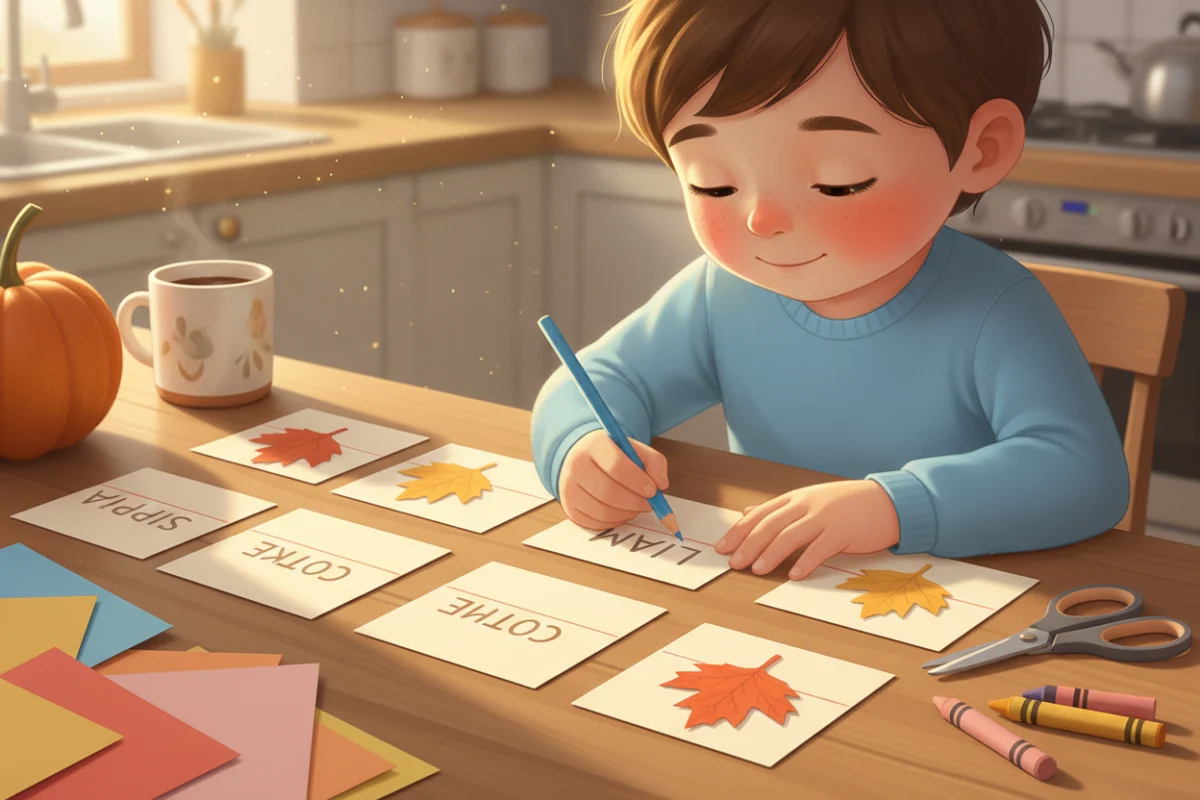
Table decorations
8. Place cards
Ages 4 and up. Skill: folding, writing, cutting. Fold small cards, decorate with a leaf or a small turkey, and write each guest’s name. This is the best handwriting practice of the weekend, because every name matters; our guide to name writing explains how to support it.
9. Napkin rings
Ages 4 and up. Skill: cutting strips, gluing rings. Toilet paper tubes cut into rings and covered with paper, or paper strips glued into rings, decorated with a paper leaf. One per guest.
10. Leaf garland
Ages 3 and up. Skill: cutting shapes, threading. Leaves cut from fall-colored paper (or torn, for the youngest) and strung on yarn along the table or the mantel.
11. Pumpkin centerpiece
Ages 5 and up. Skill: cutting strips, assembling. Paper strip pumpkins (six strips glued at top and bottom) in different sizes, grouped in the middle of the table with real mini pumpkins if you have them. Our fall paper crafts article has the strip pumpkin in detail.
12. Kids’ table kit
Ages 3 and up. Skill: everything. A paper tablecloth (a roll of brown paper) with crayons on the table, a coloring page at each seat, and a cup of crayons. The children’s table decorates itself during the meal, and the crayons keep small hands busy while the adults talk.
Crafts by age, at a glance
For a three-year-old, choose tearing and pinching: leaf garland with torn leaves, pine cone turkey, gratitude leaves with drawings, and the kids’ table crayons. For a four- or five-year-old, add cutting on lines and simple shapes: paper strip turkey, napkin rings, gratitude chain, paper bag puppet and place cards with their own name. For a six- to eight-year-old, add planning and writing: the centerpiece, place cards for every guest with a decoration, the thankful placemat with a written sentence, and running the craft table for younger cousins. Our guide to scissor skills by age shows what cutting to expect at each stage.
Talking about gratitude with young children
The crafts open the conversation, but the conversation is the point. Ask specific questions: not “what are you thankful for” but “who helped you this week?” or “what was the best thing you ate?” or “what do you like about our house?” Young children answer concrete questions far more easily. Write their answers on the leaves exactly as they say them; “pancakes” and “my dog’s ears” are perfect. Read the leaves aloud at the table and keep them in an envelope with the year on it. After a few years, the envelope becomes the family’s favorite Thanksgiving tradition.
A note on turkeys and history
Turkeys, leaves and gratitude are the safest Thanksgiving themes for children. If your child asks about the history, keep it simple and honest: long ago, people shared a harvest meal with the Native people who already lived here; today we gather to share food and say thank you, and we remember that Native families are still here with their own traditions. Skip costumes and paper headdresses.
Making it work on the day
Do the crafts across the week, not on the day. Monday and Tuesday for gratitude and turkeys, Wednesday for the table decorations, and Thanksgiving morning for the placemats and the kids’ table. Set up a craft spot away from the kitchen with a tray, a bin for scraps and everything in one box; our easy paper crafts for preschoolers explains the setup. Let older cousins run the craft table when guests arrive.
Keeping the crafts
Handprint turkeys are the keepsake of the list. Write the child’s name and the year on the back and keep one per year in a folder; the growing hand is the point. Placemats come out every Thanksgiving. Place cards go home with the guests. The rest is decoration and can go in the recycling on Friday with no guilt. A quick photo of the table before the meal captures everything at once.
Frequently asked questions
What Thanksgiving crafts can a 3-year-old make?
Handprint turkeys (with an adult tracing and cutting), pine cone turkeys, torn leaf garlands and gratitude tree leaves with drawings.
What is a gratitude tree?
A bare branch or paper trunk to which family members add paper leaves with something they are thankful for, usually one a day in the week before Thanksgiving, read aloud at the meal.
What Thanksgiving crafts help with handwriting?
Place cards, thankful placemats and feathers with thankful words all involve purposeful writing. Writing every guest’s name on a place card is the best of them.
How do I keep kids busy on Thanksgiving?
A kids’ table with a paper tablecloth and crayons, a craft box away from the kitchen, and a job for each child (place cards, napkin rings, the centerpiece) so they feel part of the day.